Screens and components for SaaS products, ready for your agent.
Designed in Figma, shipped as one React file each, with the same tokens in light and dark.
39 items
The frame of a signed-in product: sidebar navigation, top bar with breadcrumb and search, command menu and user menu.
The home page of the product: date range, a KPI row, the main chart, a breakdown, plan usage and recent activity.
Google, Microsoft and SAML SSO, work email with a magic link and a 6-digit code, and a product visual.
Sign up with workspace creation in four steps: account, workspace, invite, done.
A setup checklist on Home: six steps, each with a reason and one action.
The shared settings frame: section nav, label and control rows, and a floating save bar.
Profile, sign-in and security, plus how agents should address you and when to ask.
Transfer ownership, export everything and delete the workspace, each with its consequences.
The main list of a resource: saved views, search, quick filters, selection, row actions and pagination.
First run, no results, error and no permission, each with its own way out.
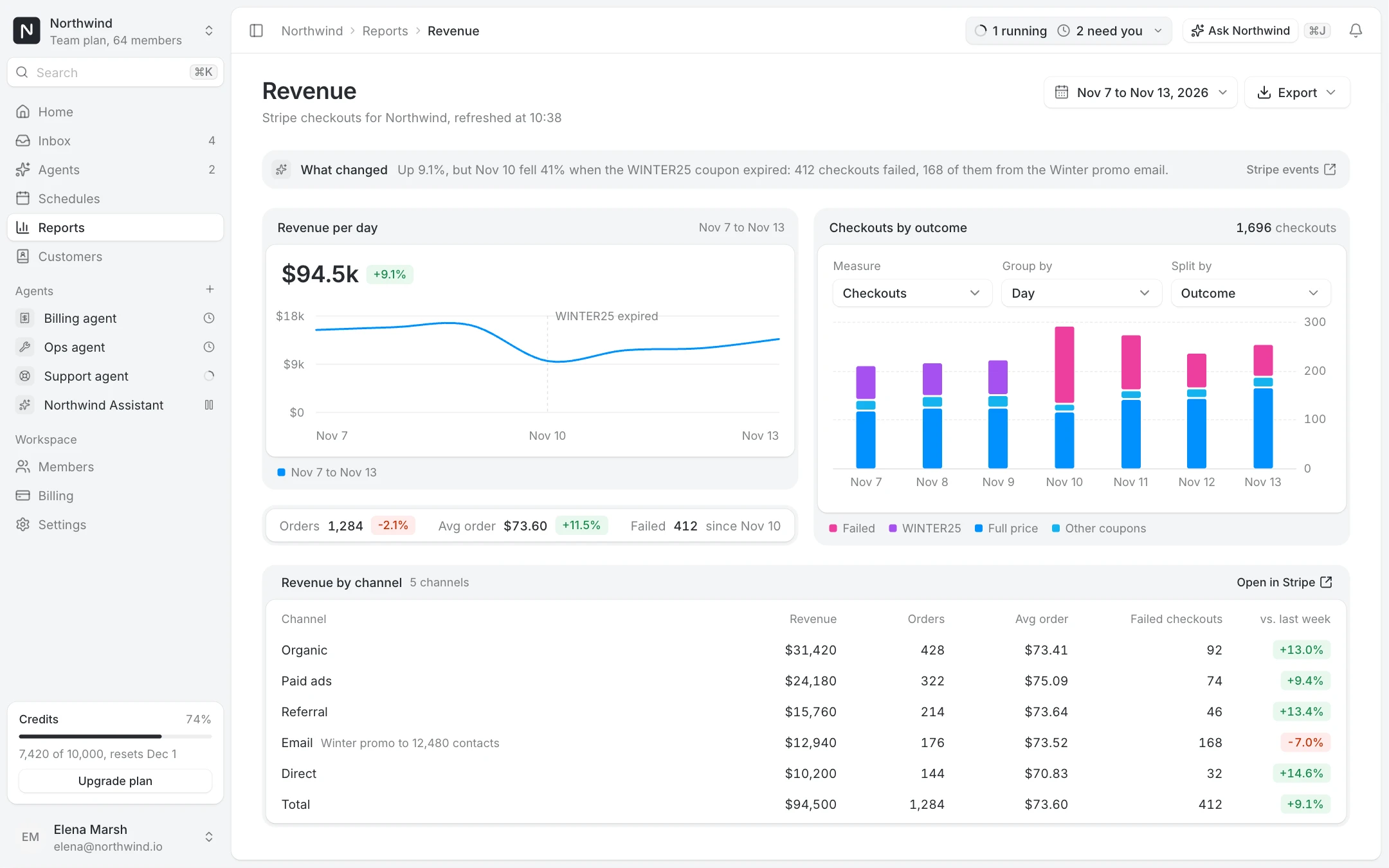
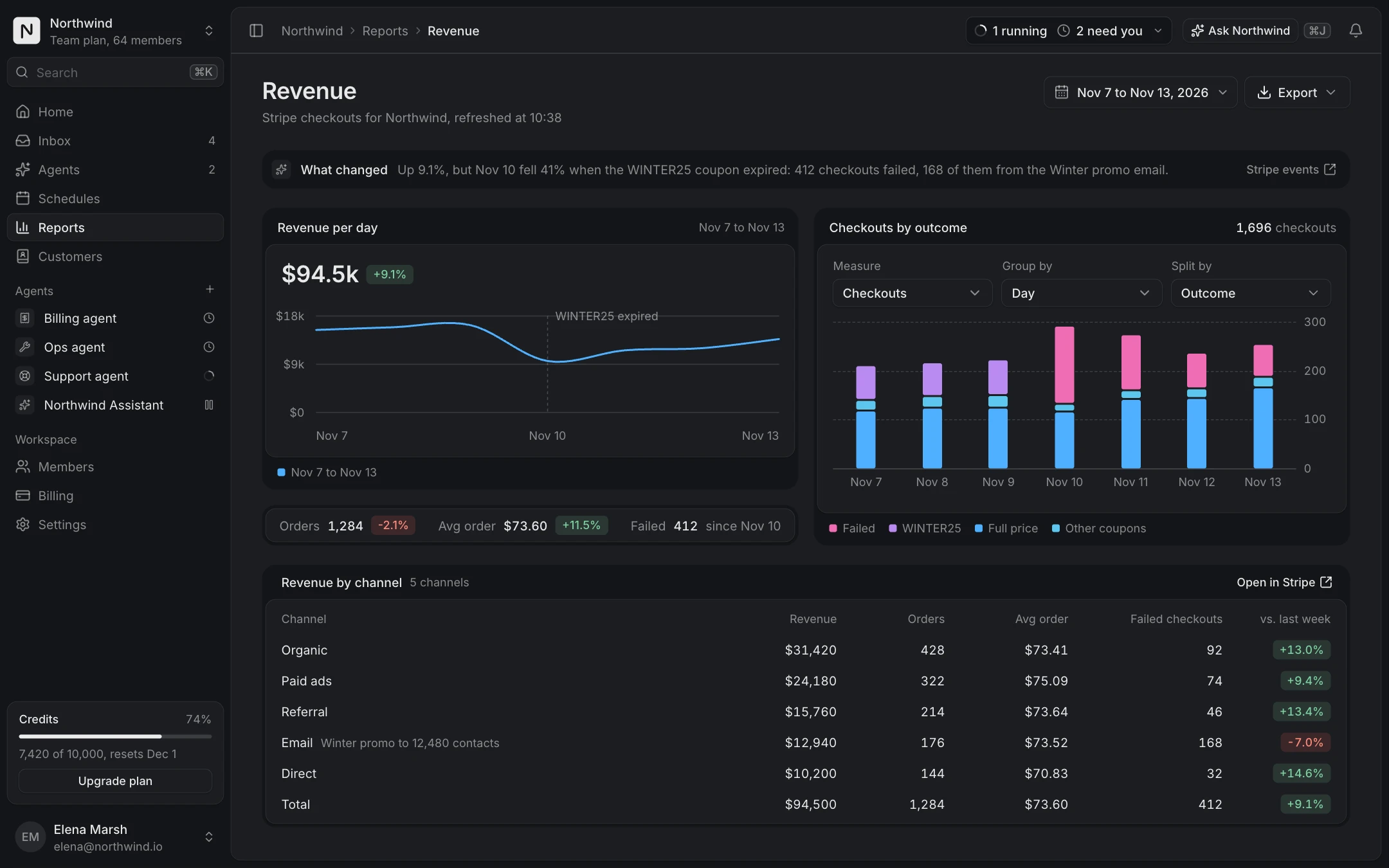
Date range with compare, revenue per day, checkouts by outcome, the channel table and export.
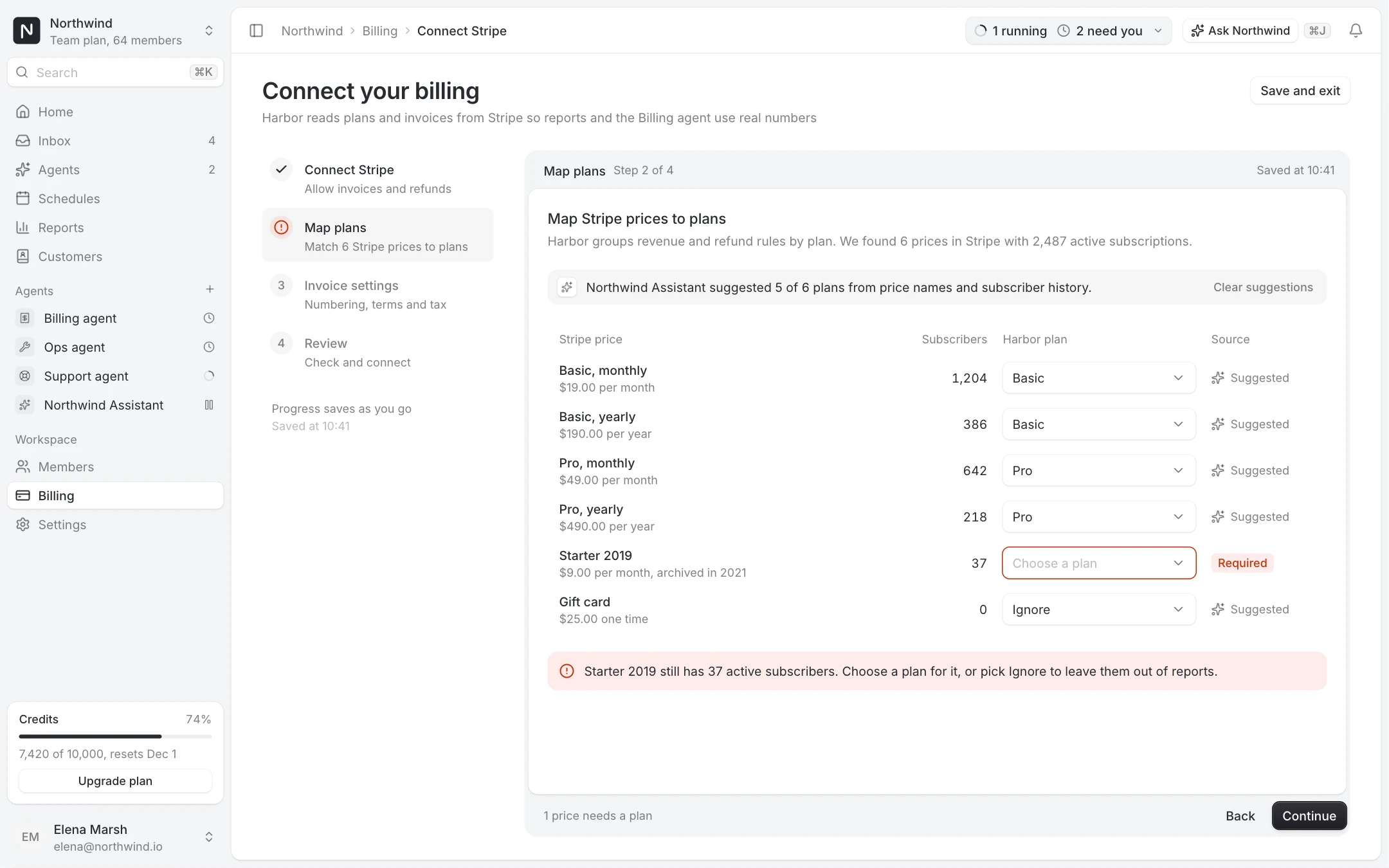
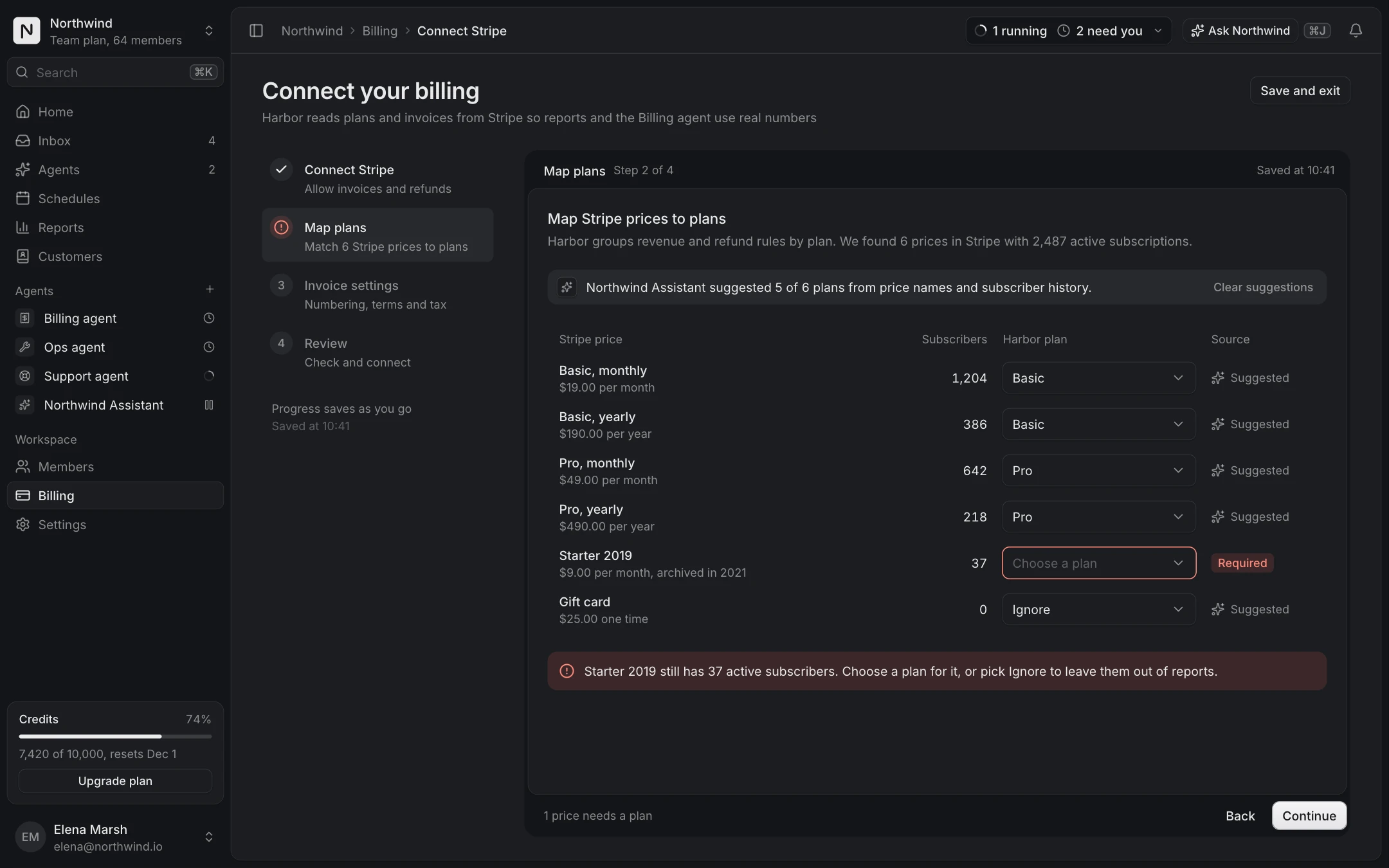
A four step wizard to connect billing, with validation, saved progress and resume.
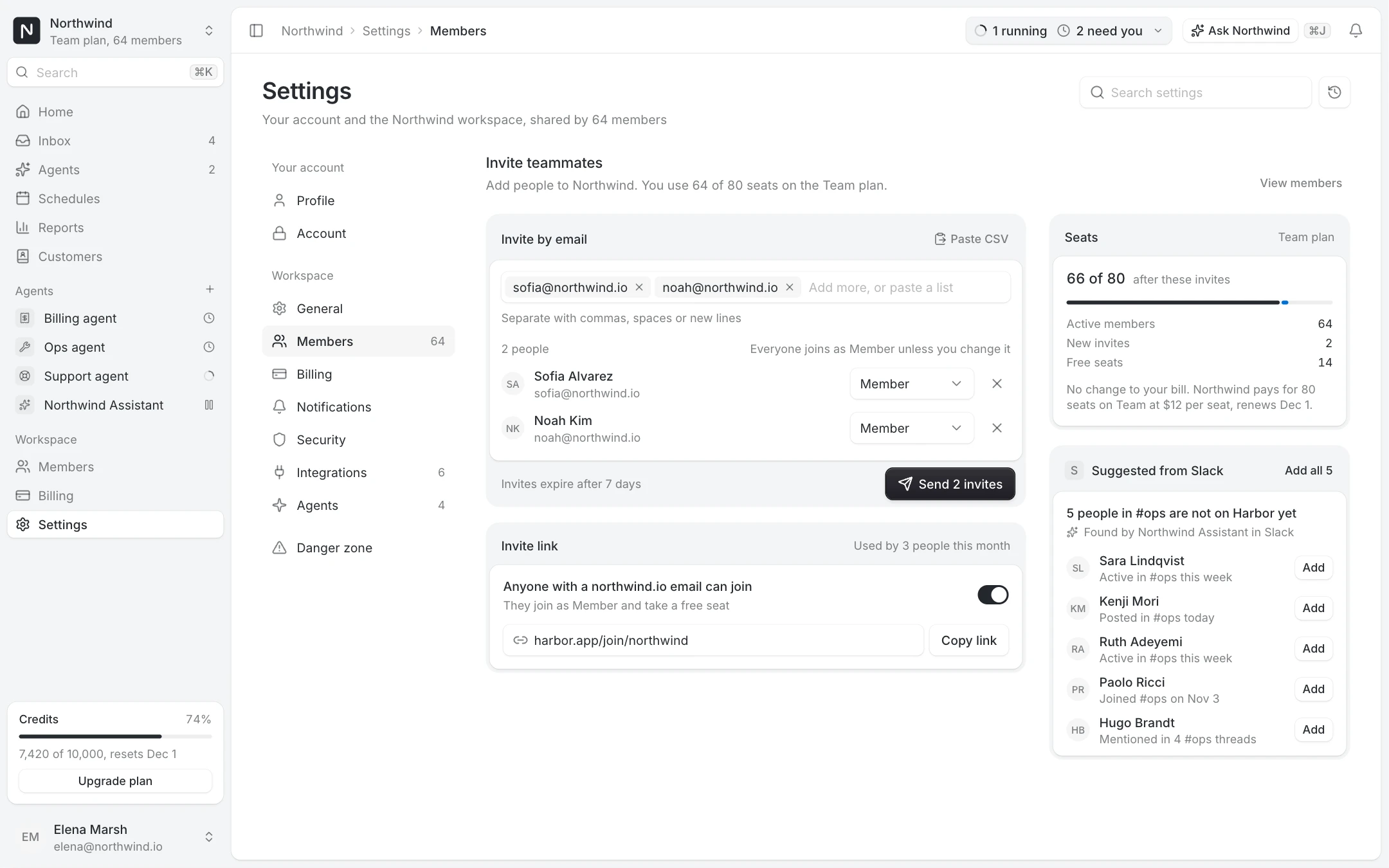
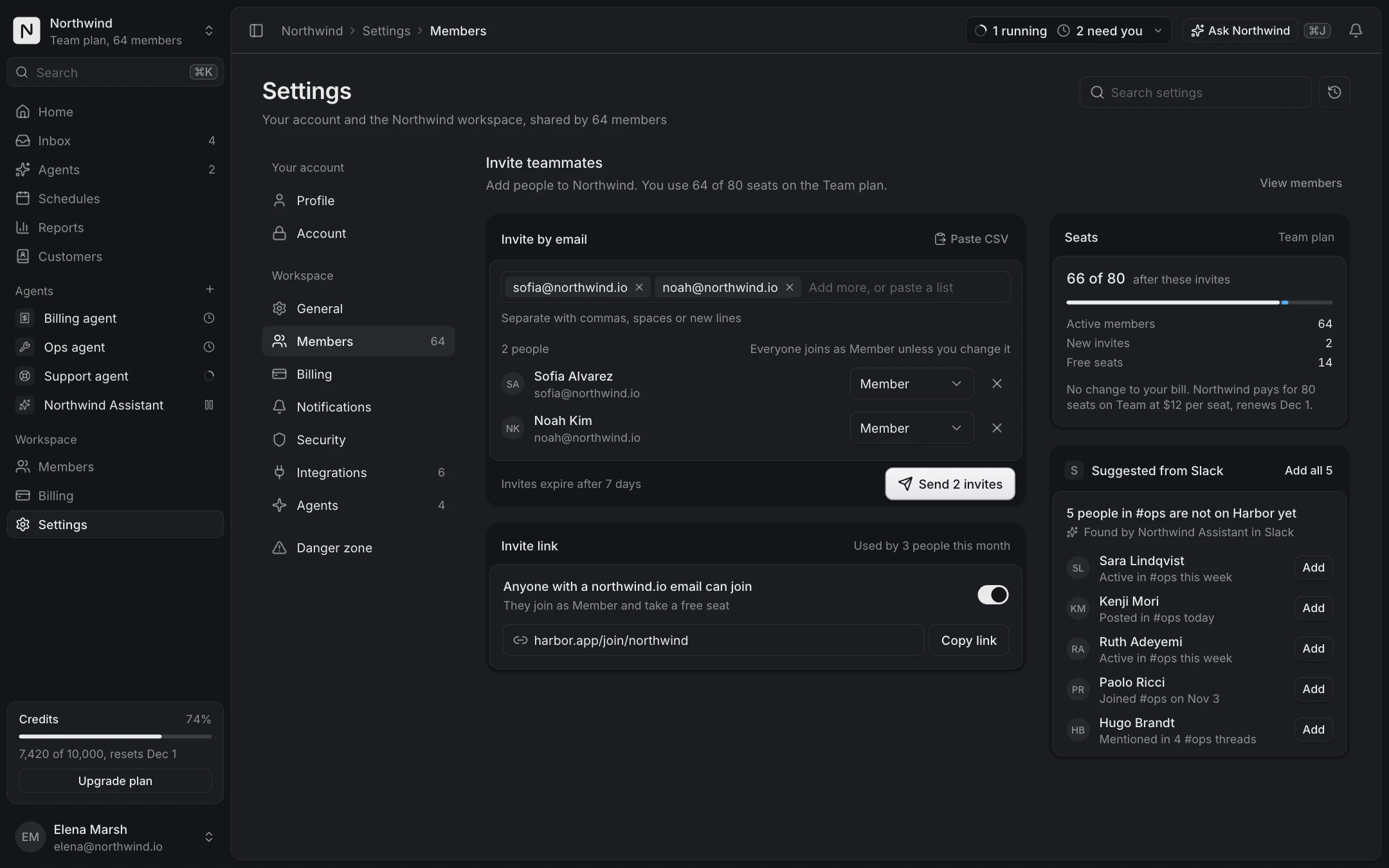
Invite by email or CSV, a role for each, and the seat impact before sending.
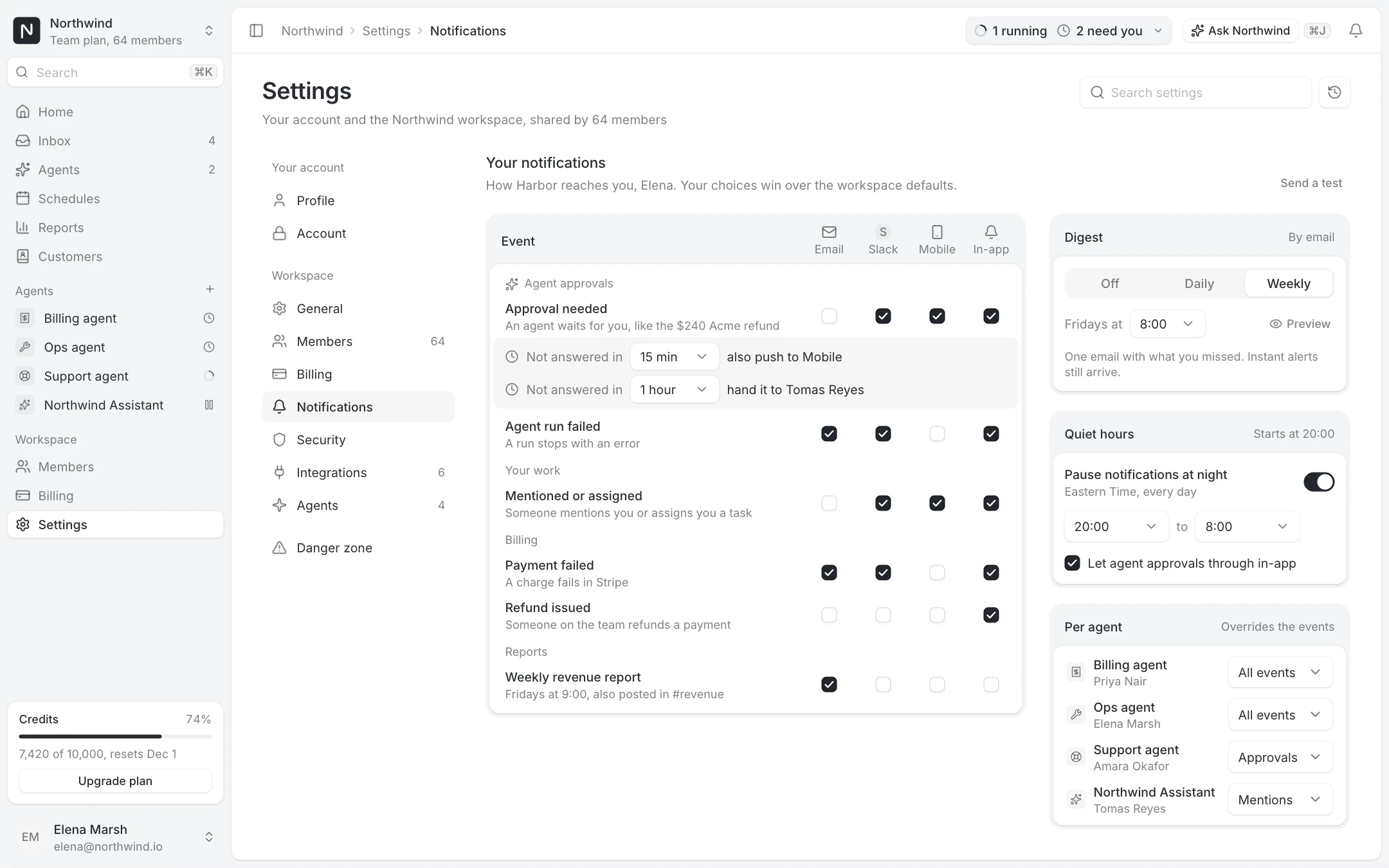
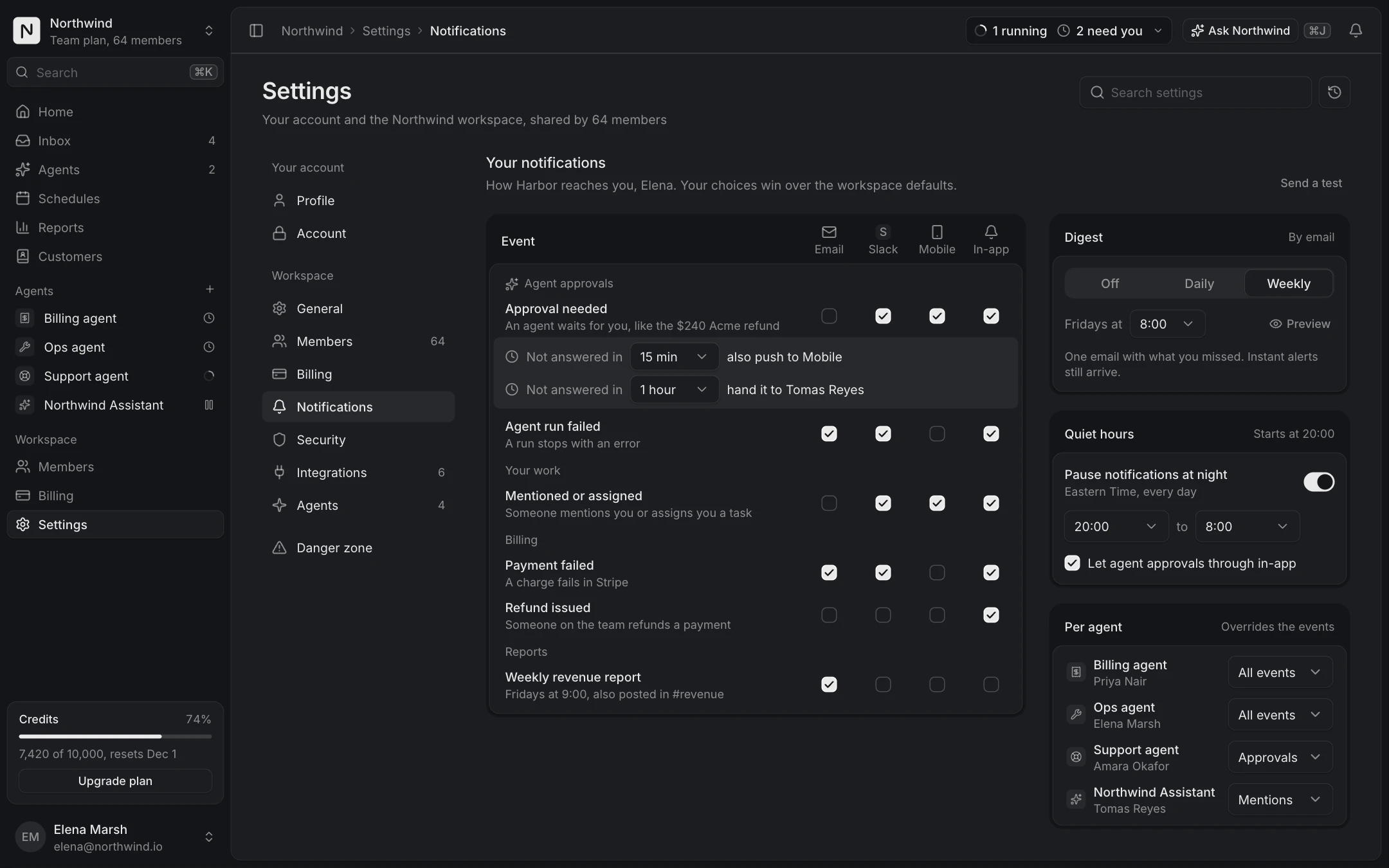
Events by channel, digest, quiet hours and per agent overrides.
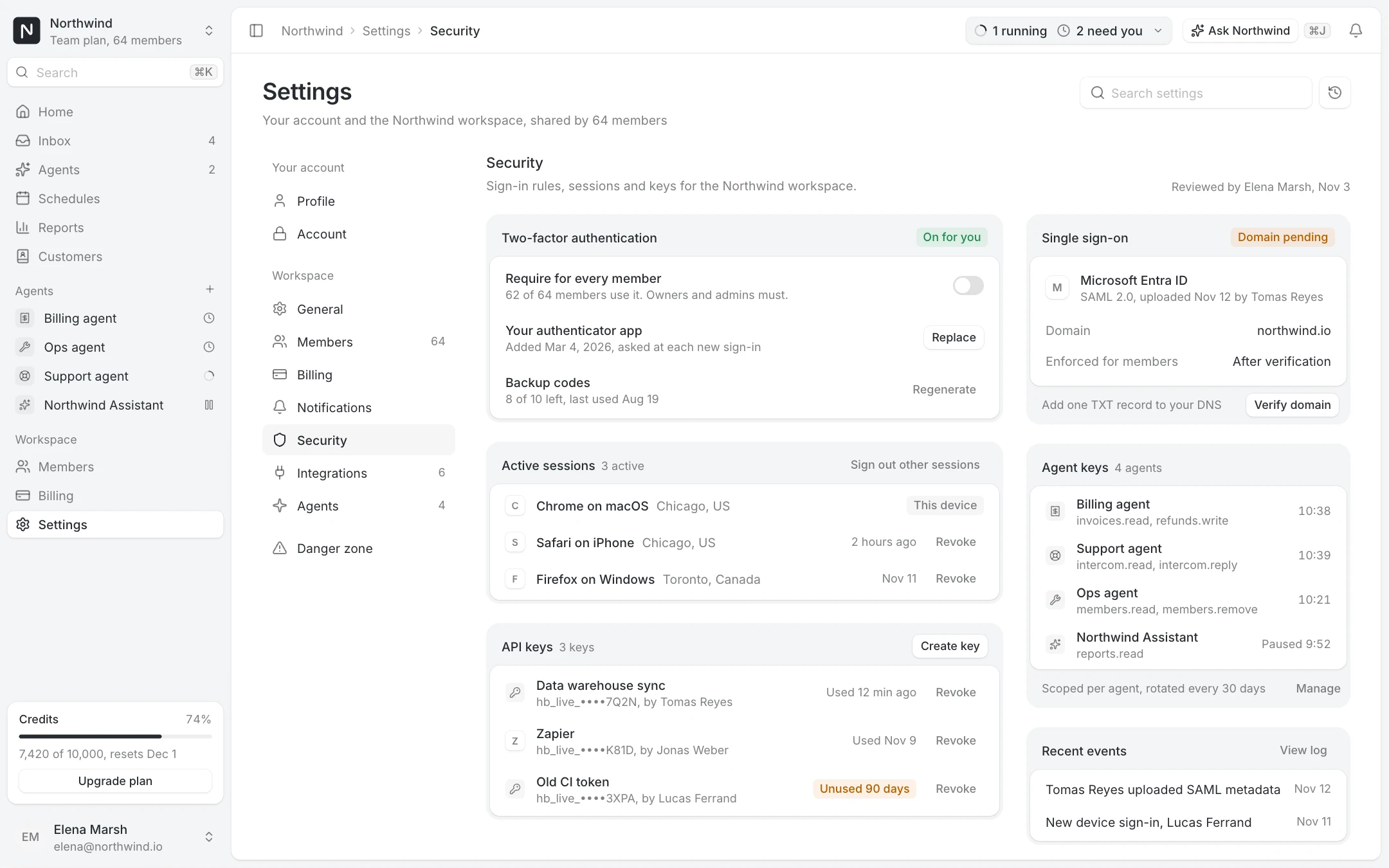
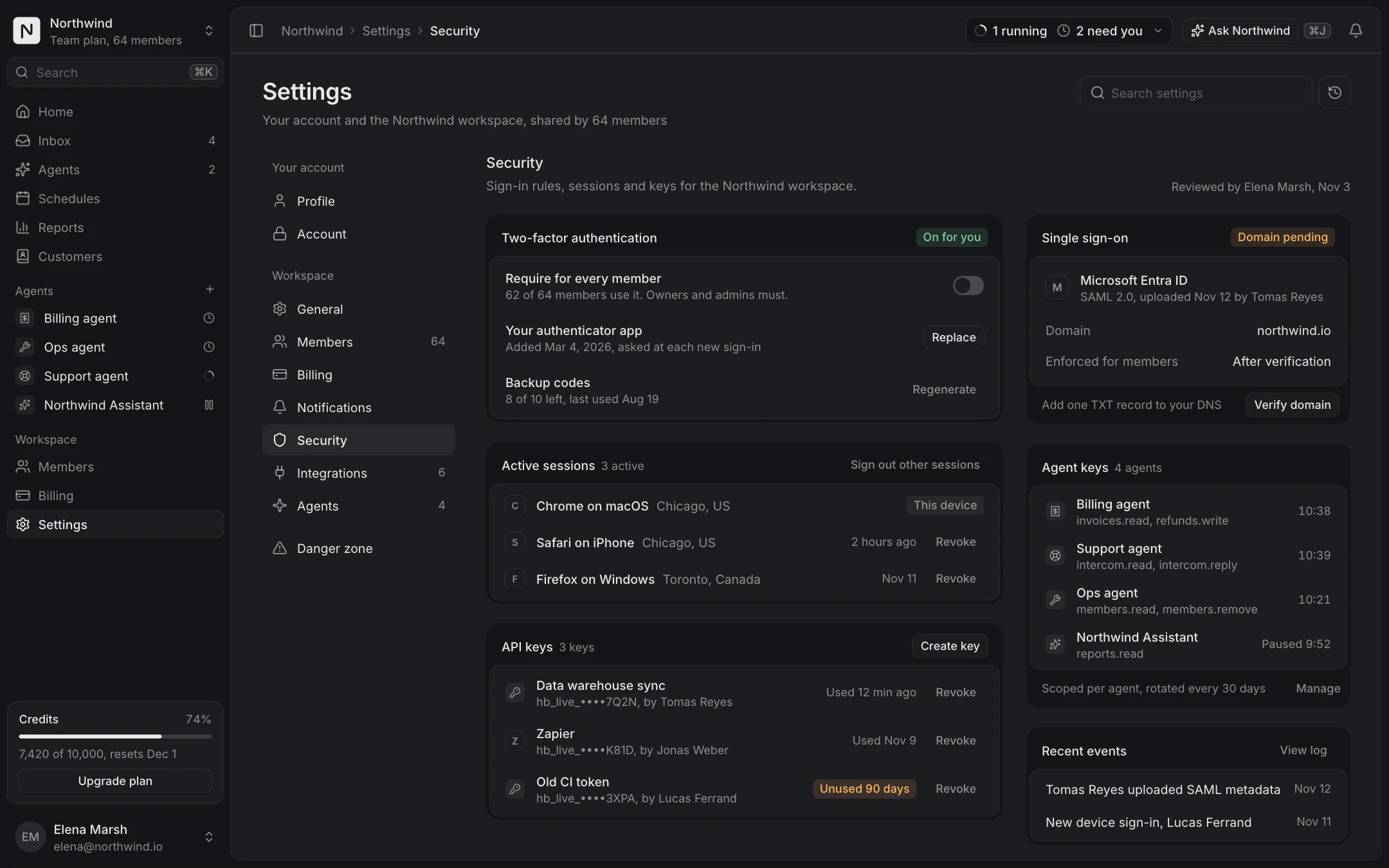
Two-factor rules, active sessions, API keys, SAML status and the keys each agent uses.
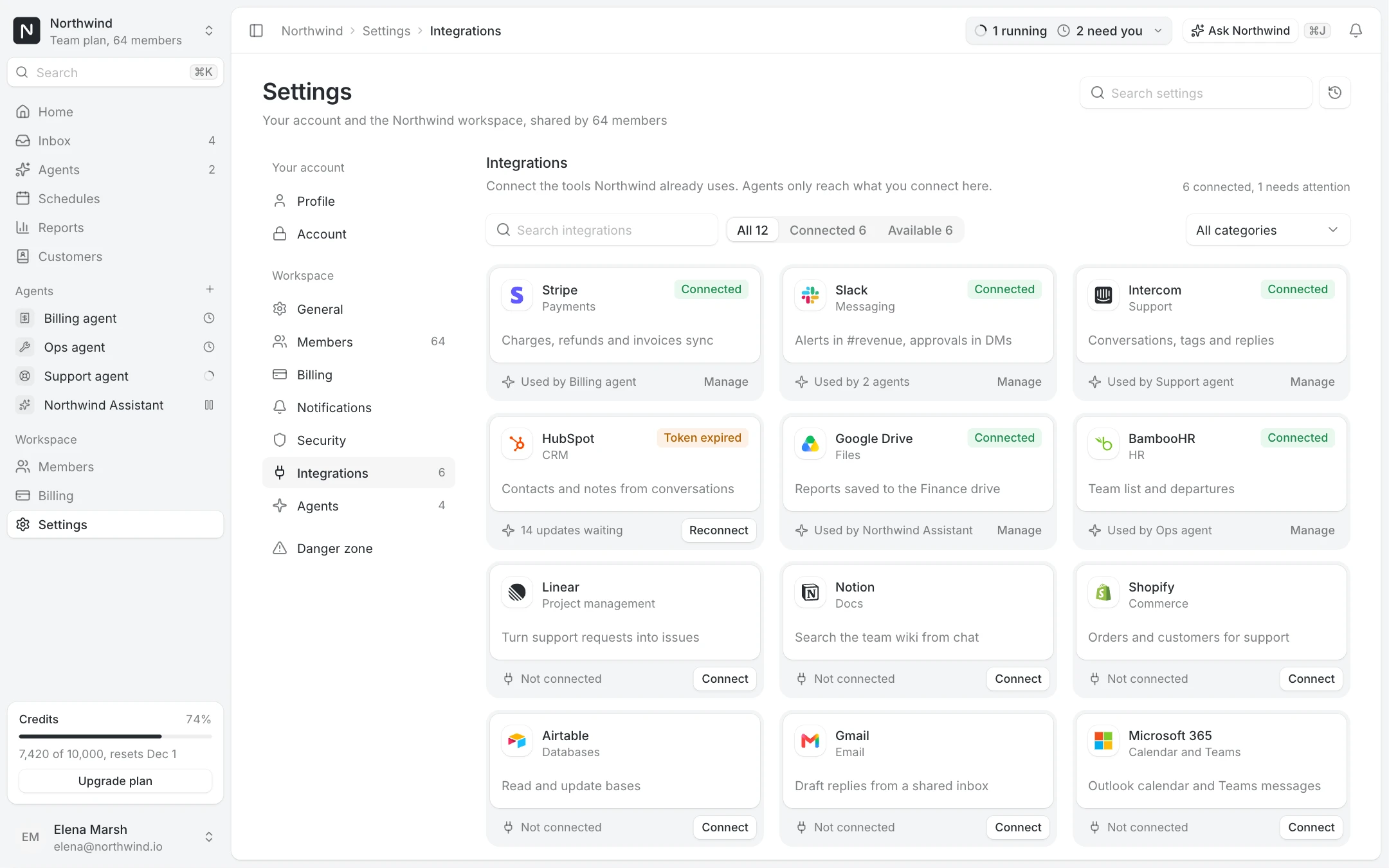
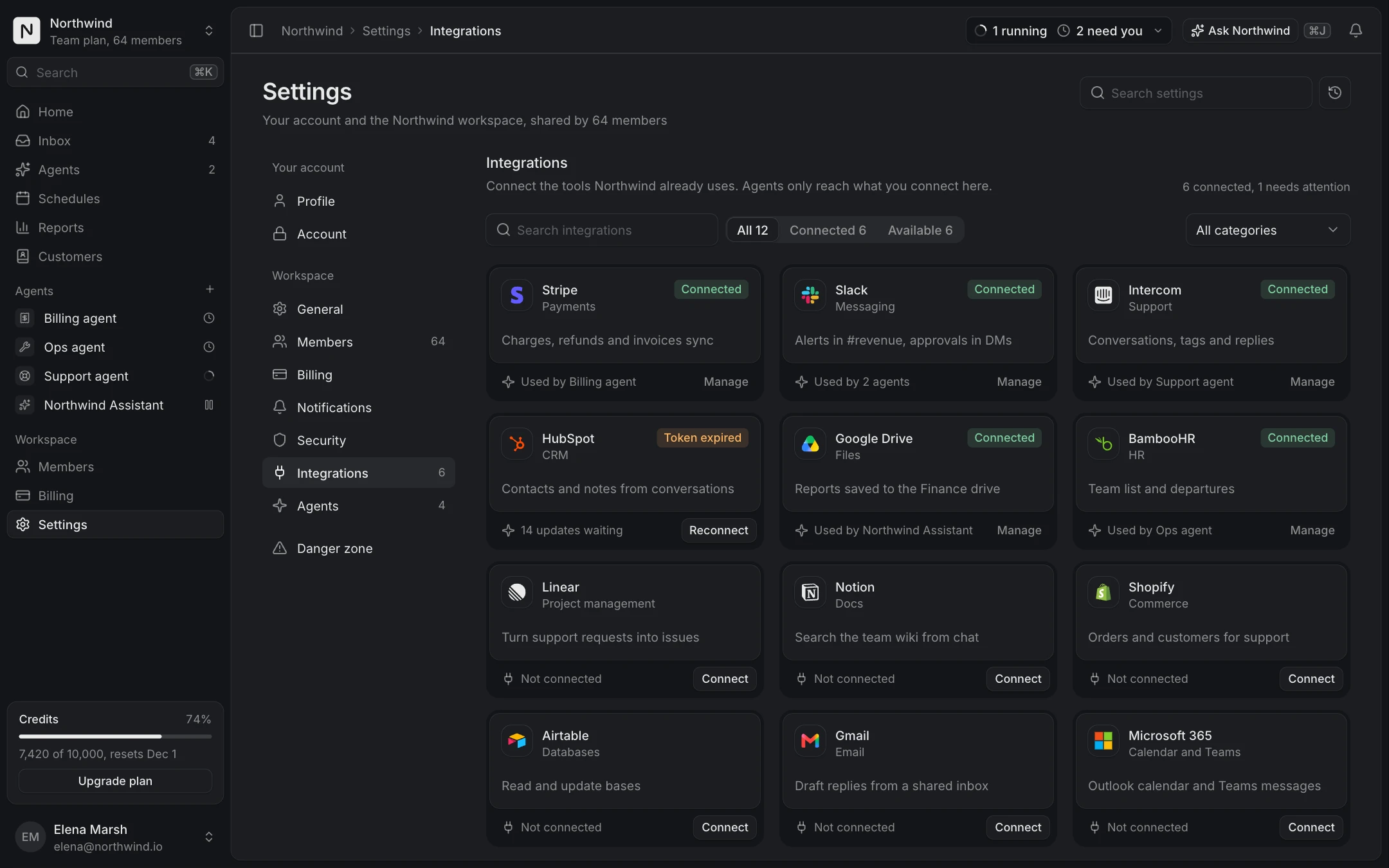
A searchable grid of tools with connected, available and needs-attention states.
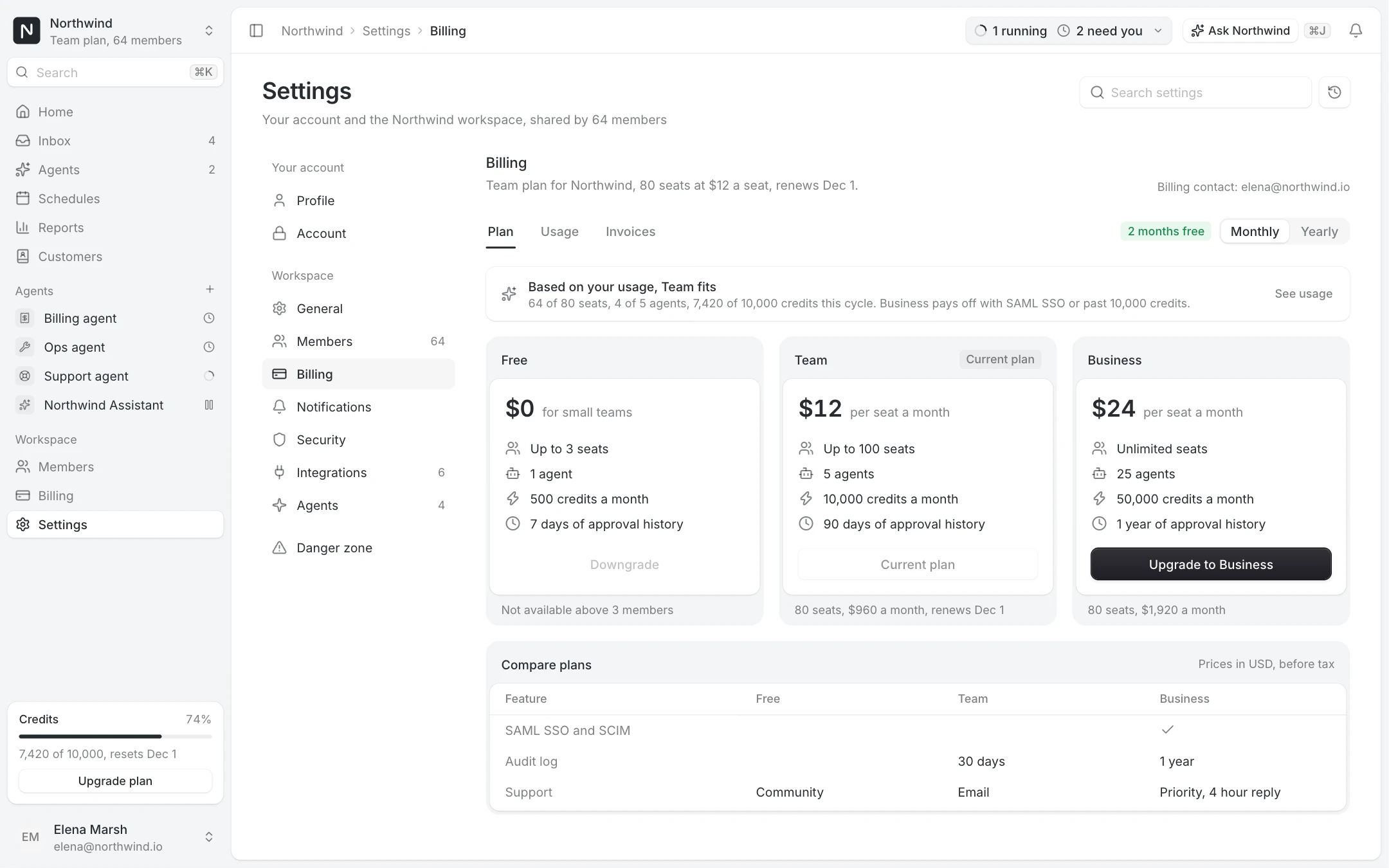
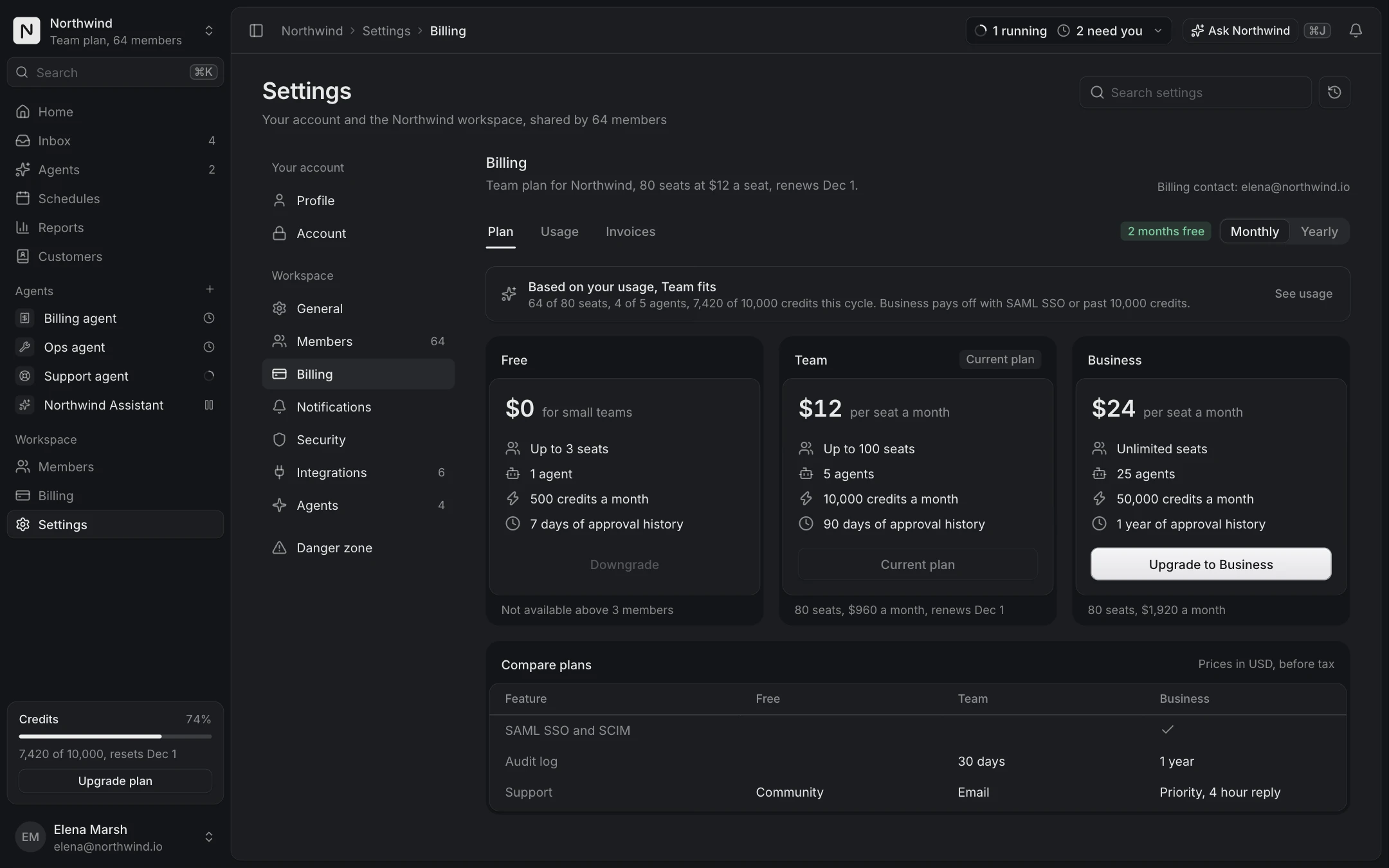
Free, Team and Business, monthly or yearly, a comparison table and the upgrade confirmation.
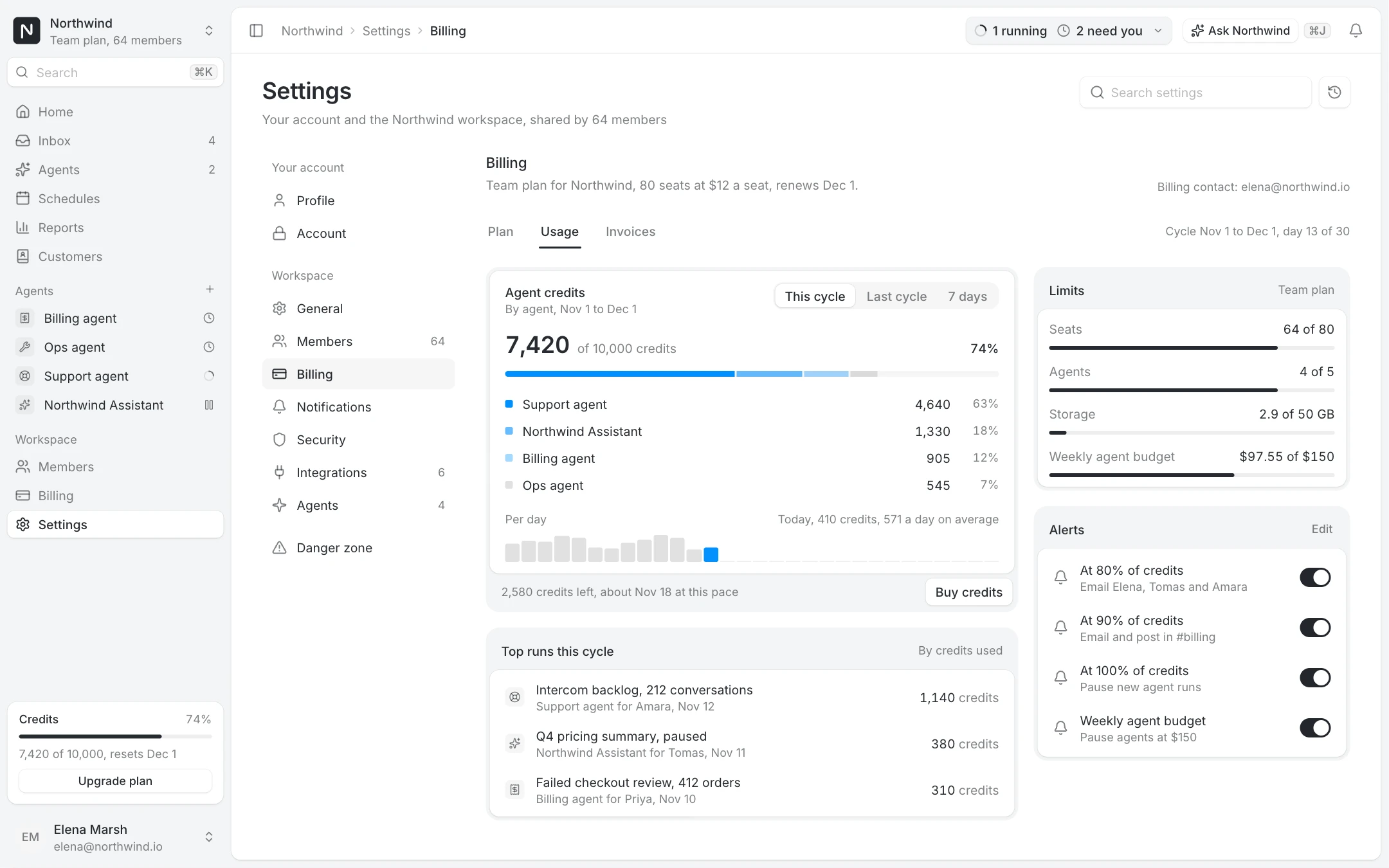
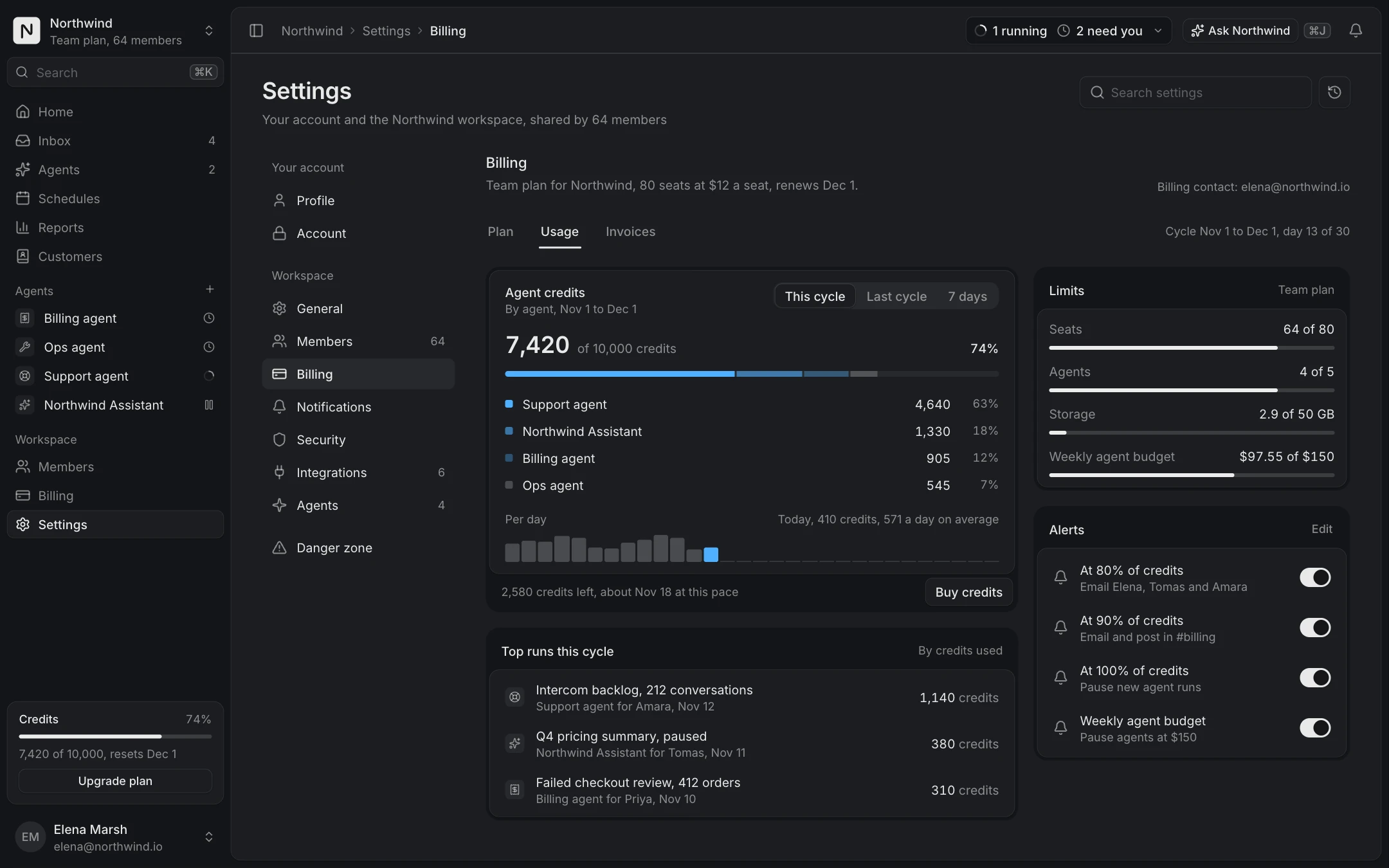
Agent credits, limits for seats, agents and storage, usage alerts and the near-limit state.
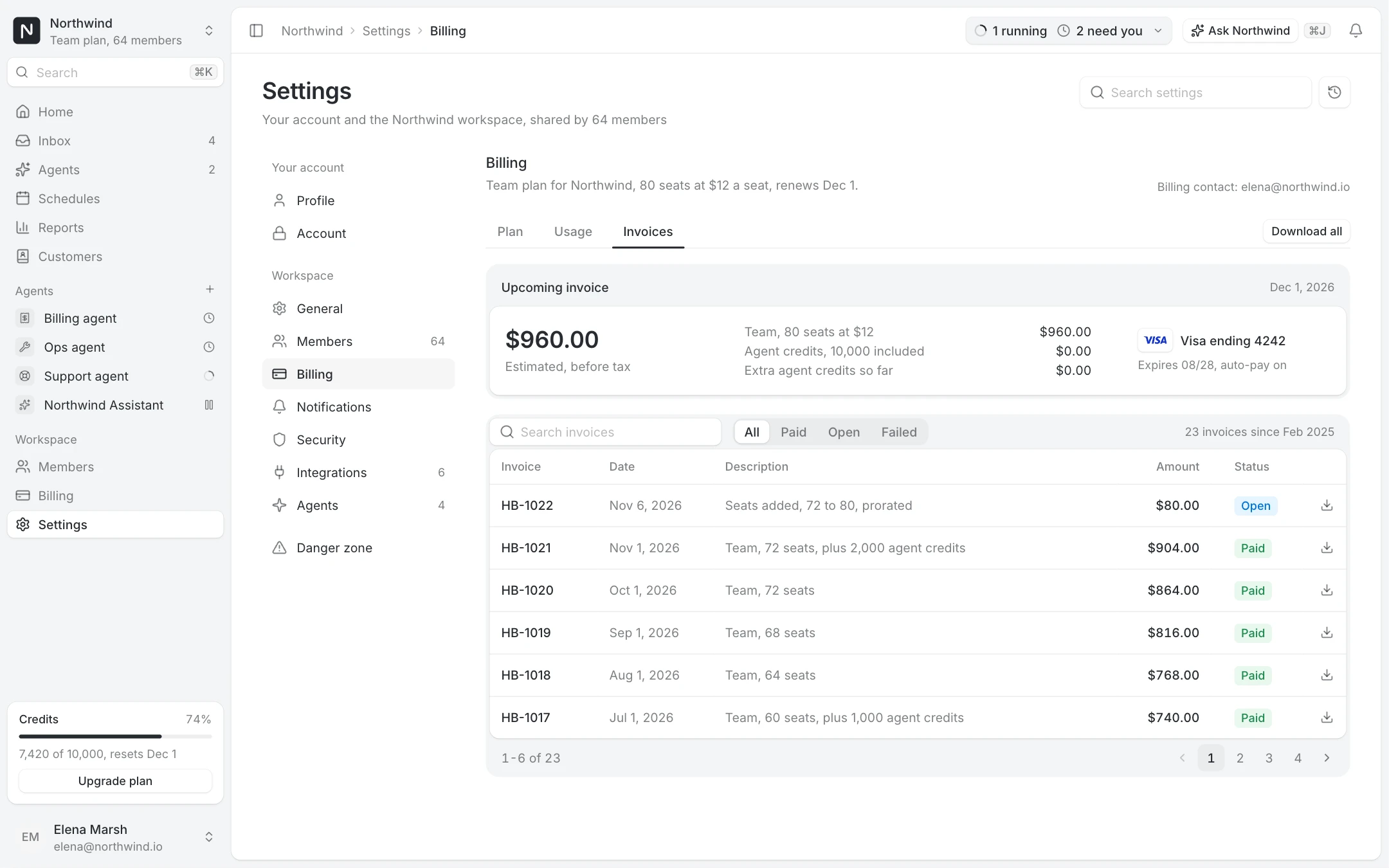
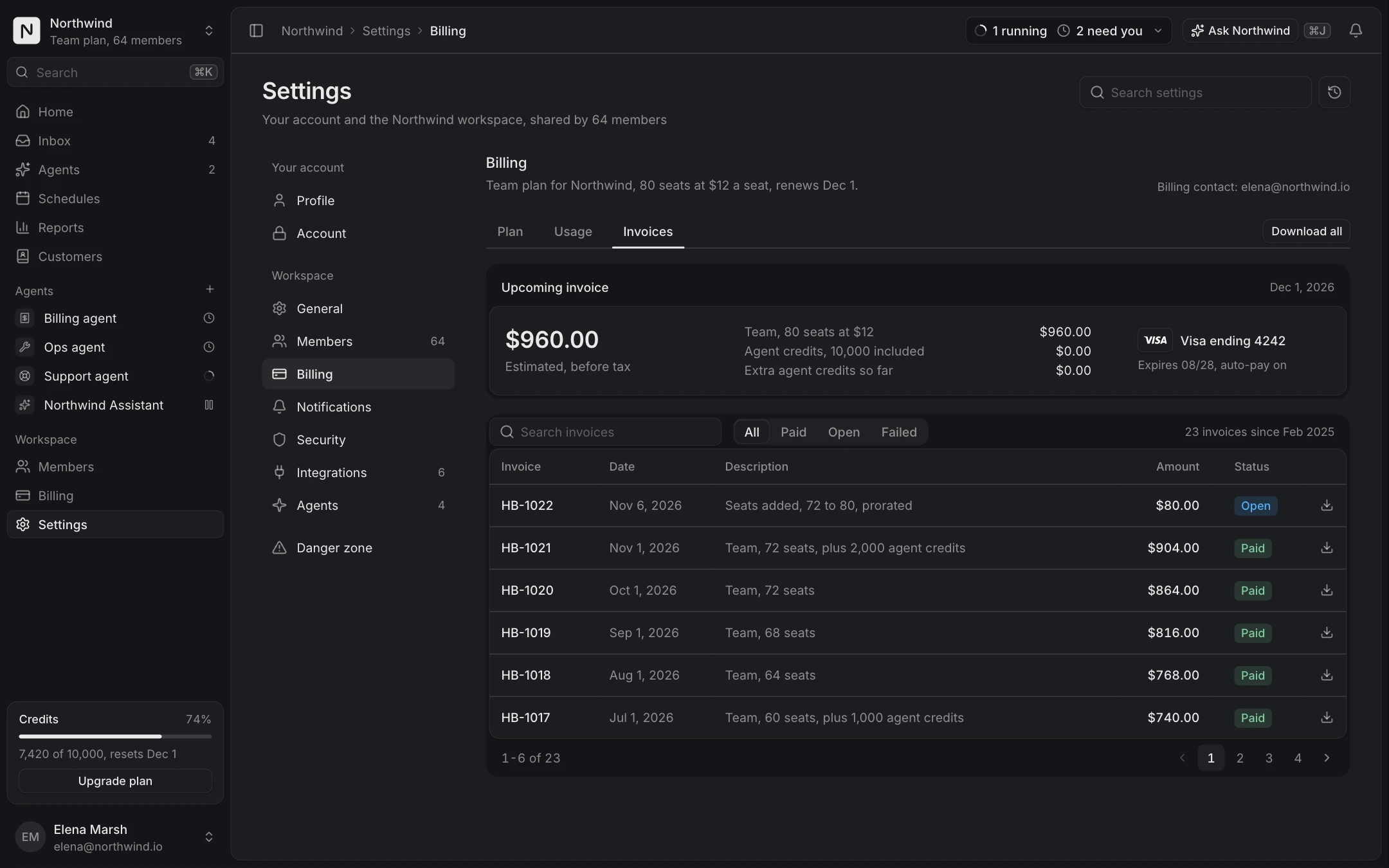
The upcoming invoice, the invoice table with status and download, and the failed payment state.
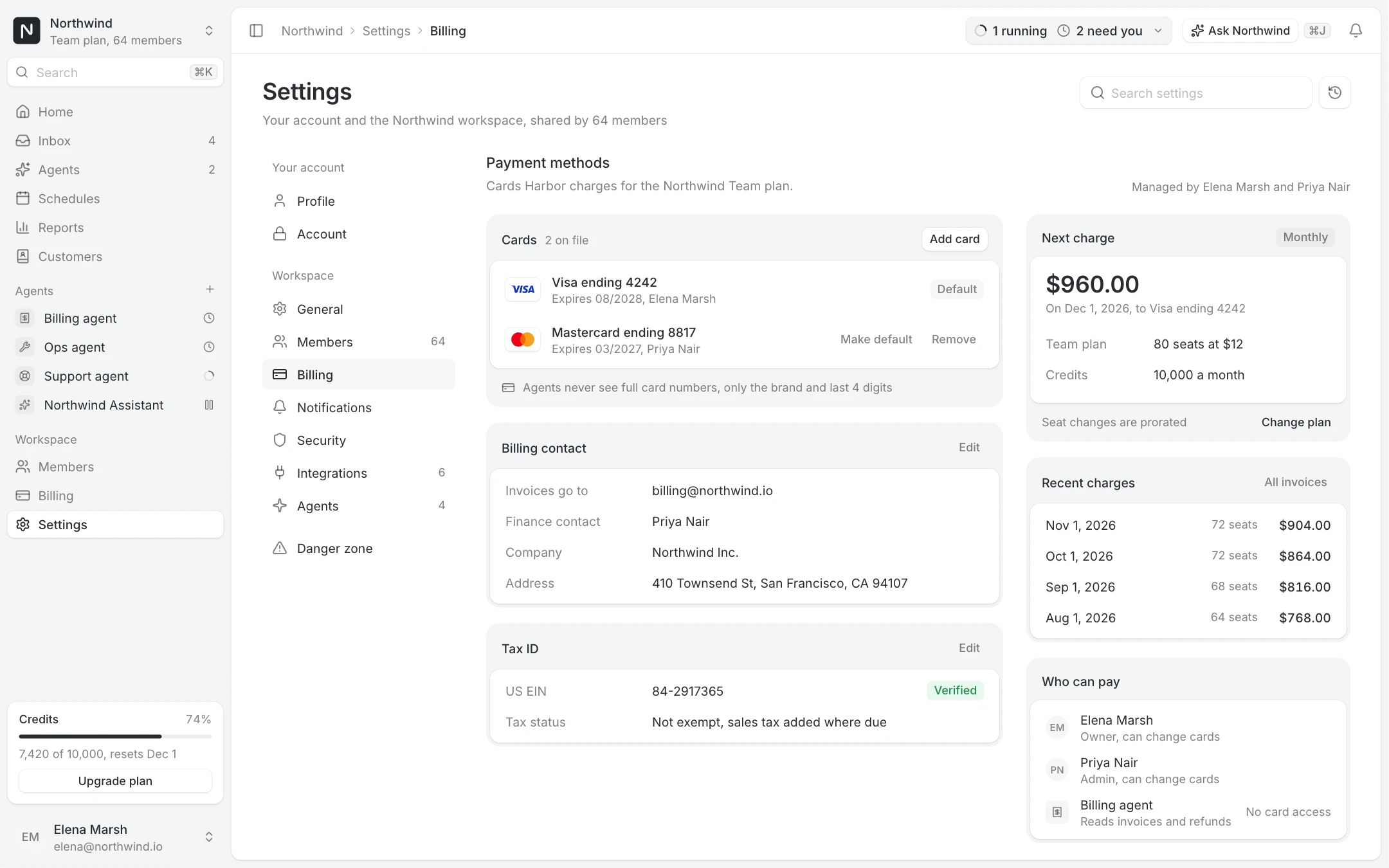
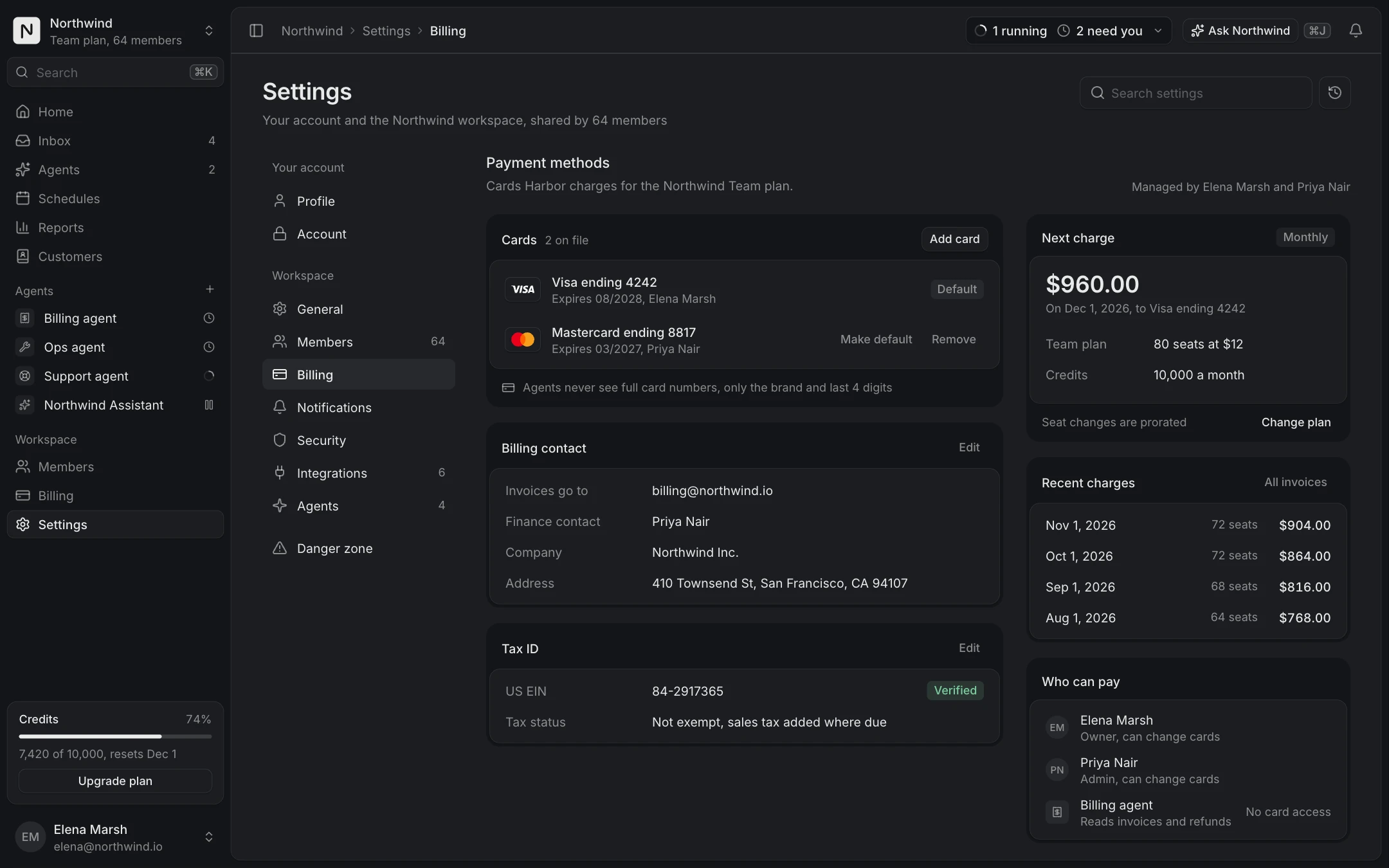
Cards on file, the default card, billing contact and tax ID, with the next charge.
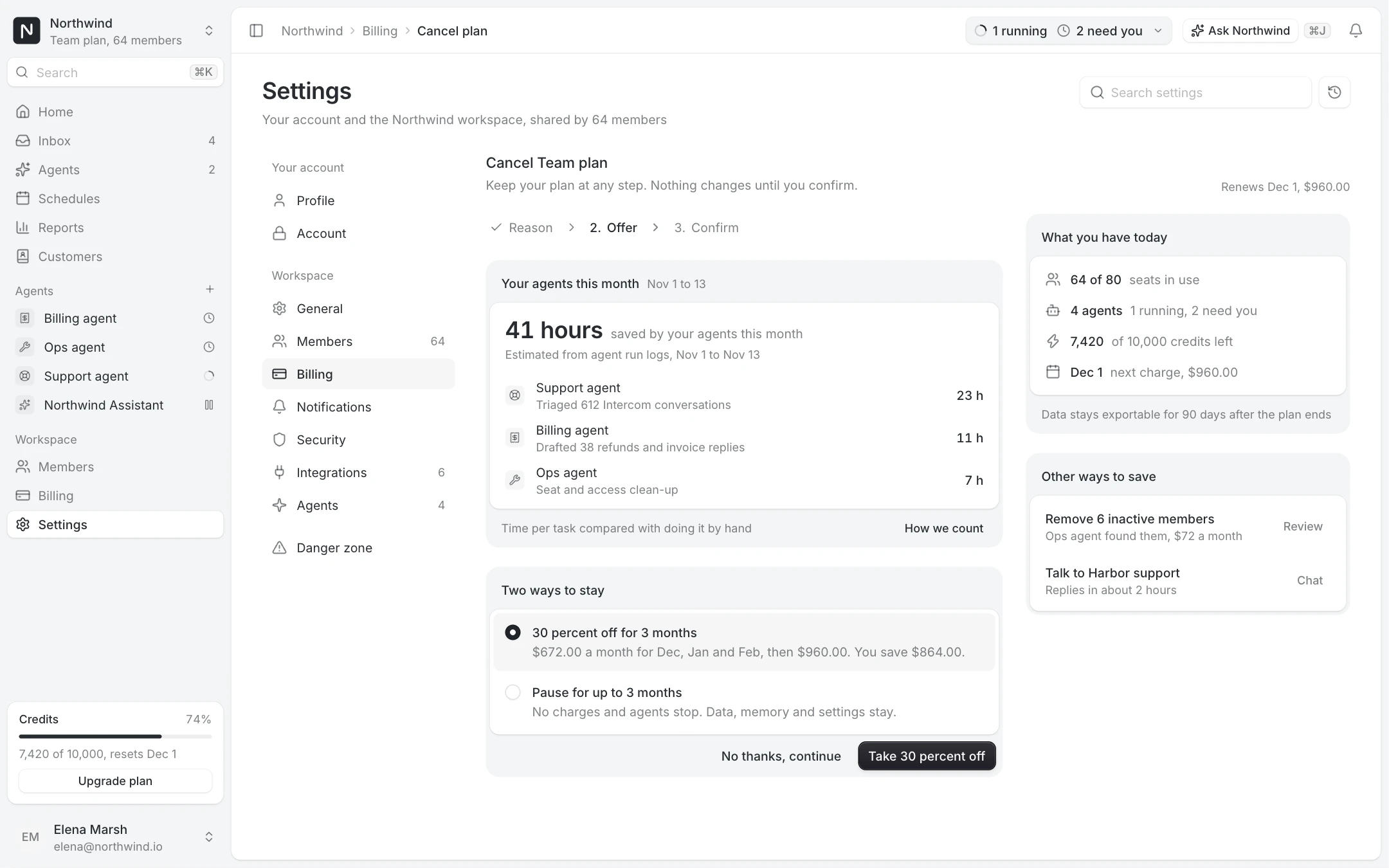
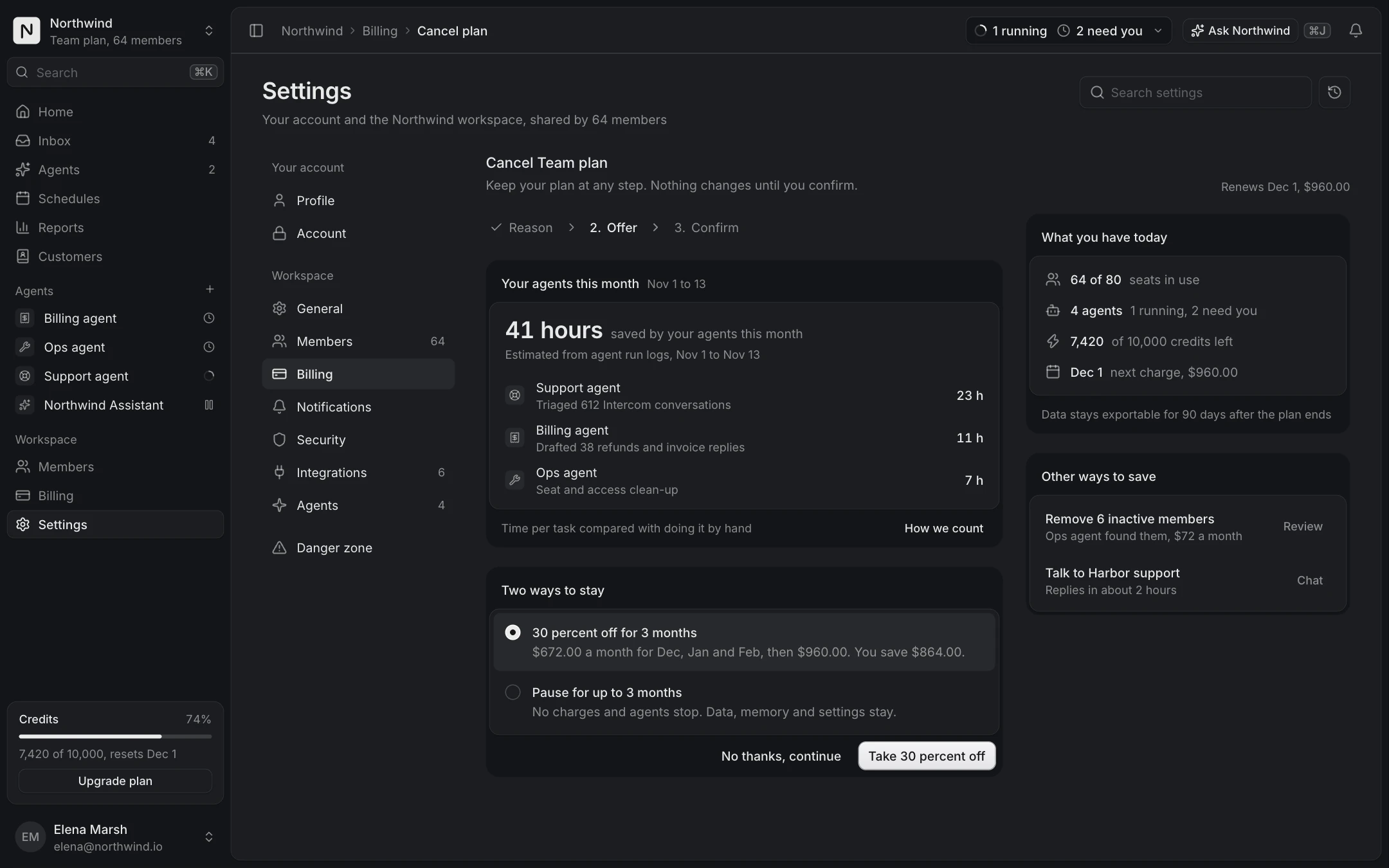
A calm way out: reason, a retention offer, a clear confirm step and what happens next.
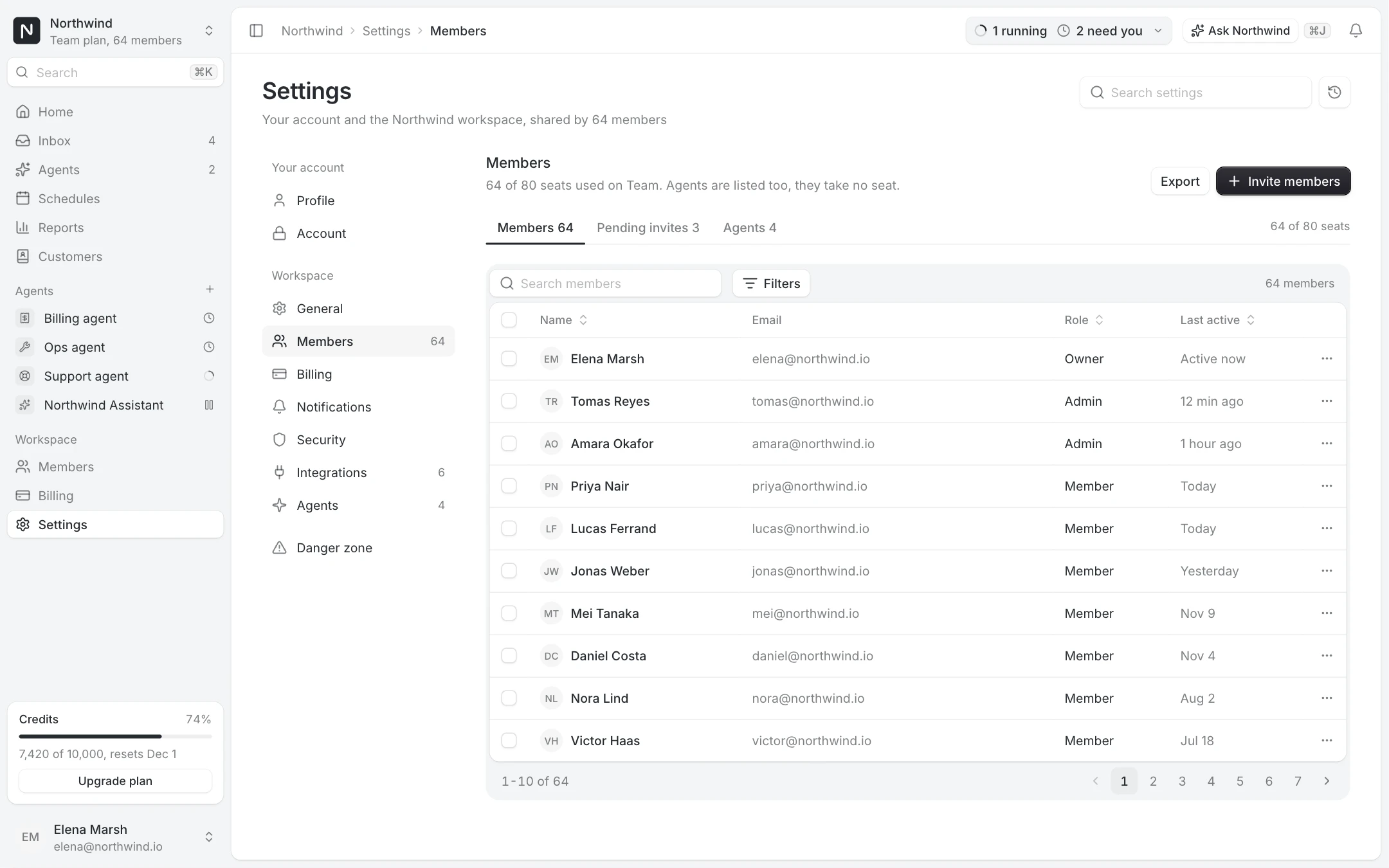
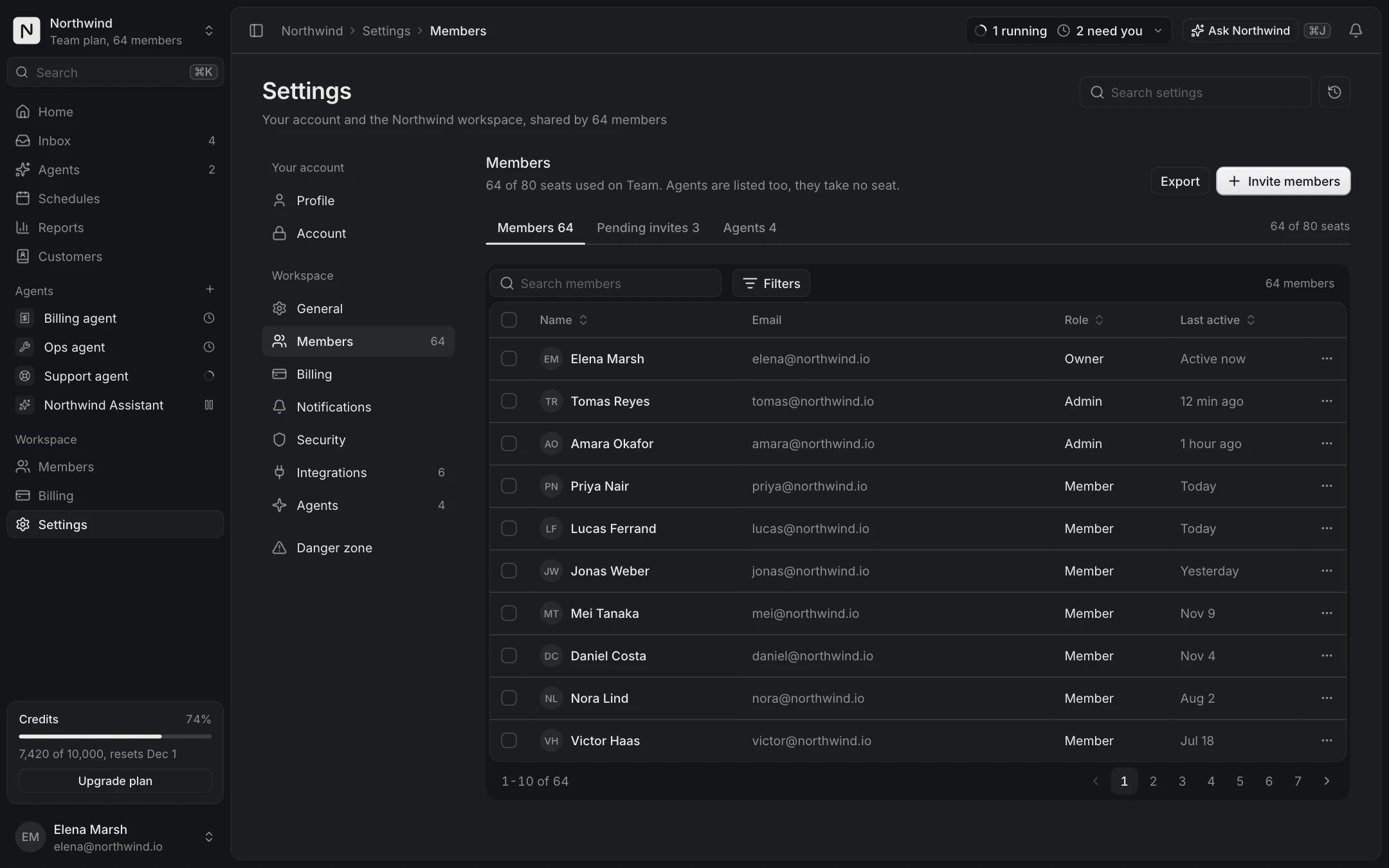
Roles, search, filters, bulk actions, pending invites and agents with their owner.
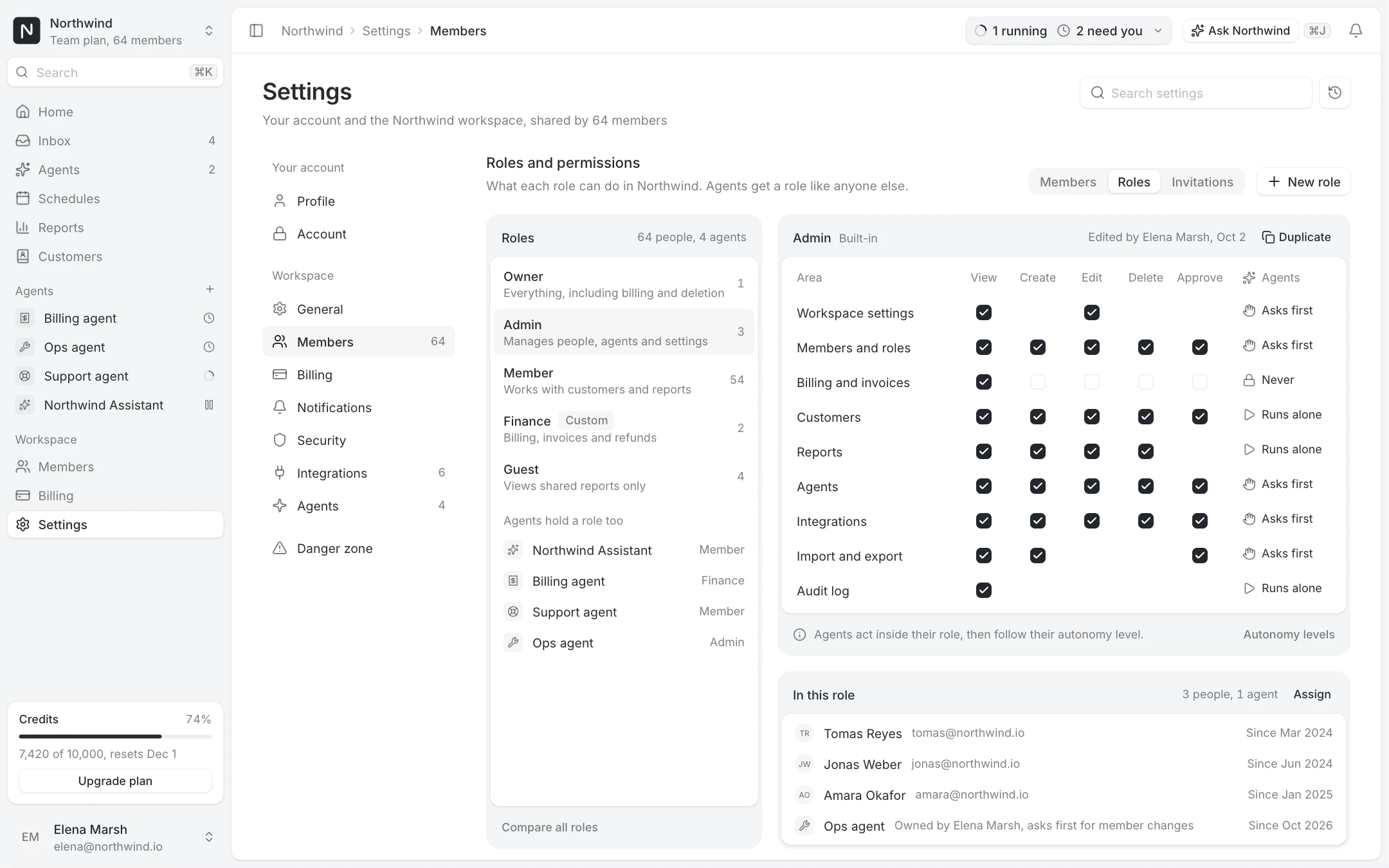
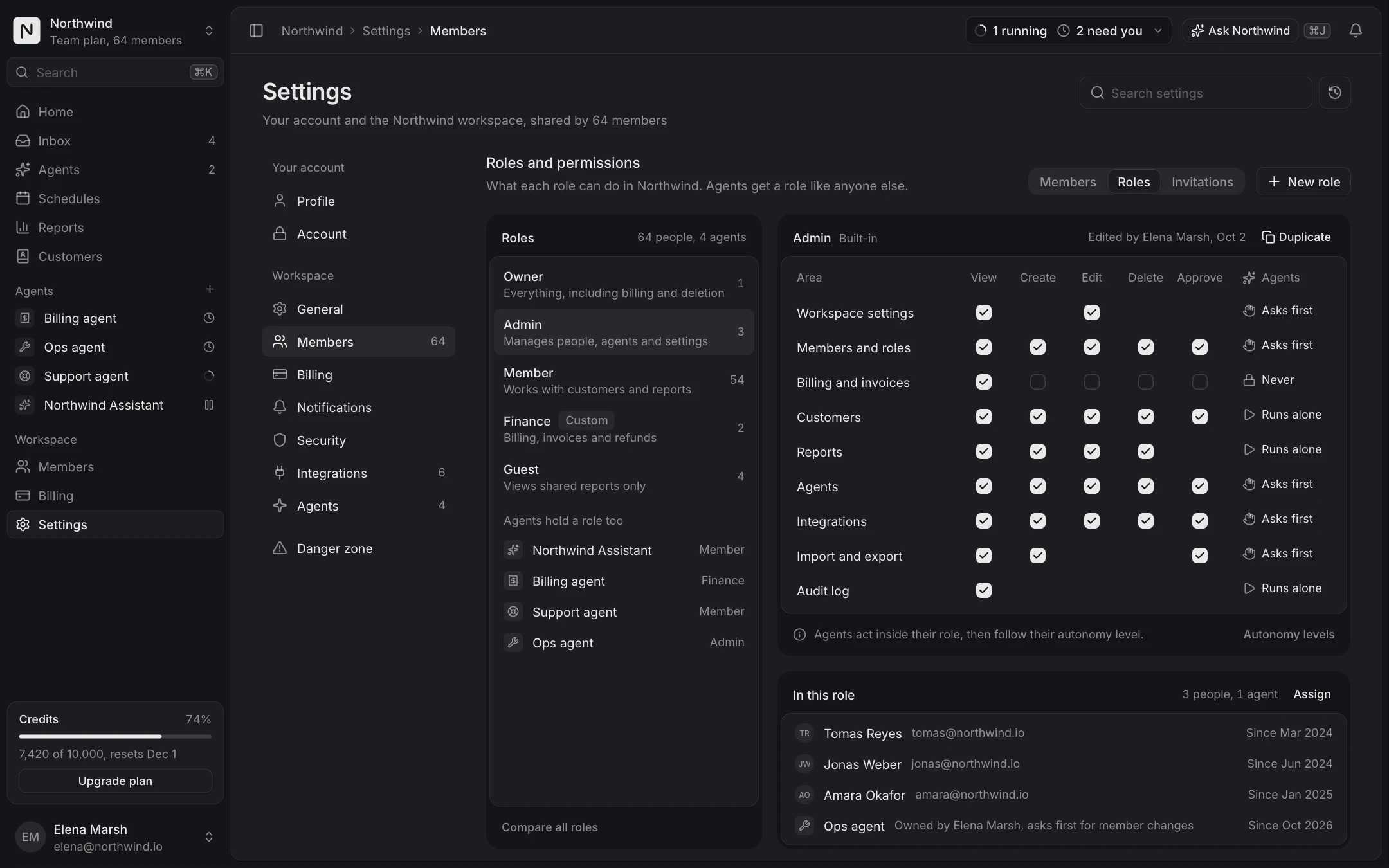
Five roles, a permissions matrix, a custom role editor and what agents may do alone.
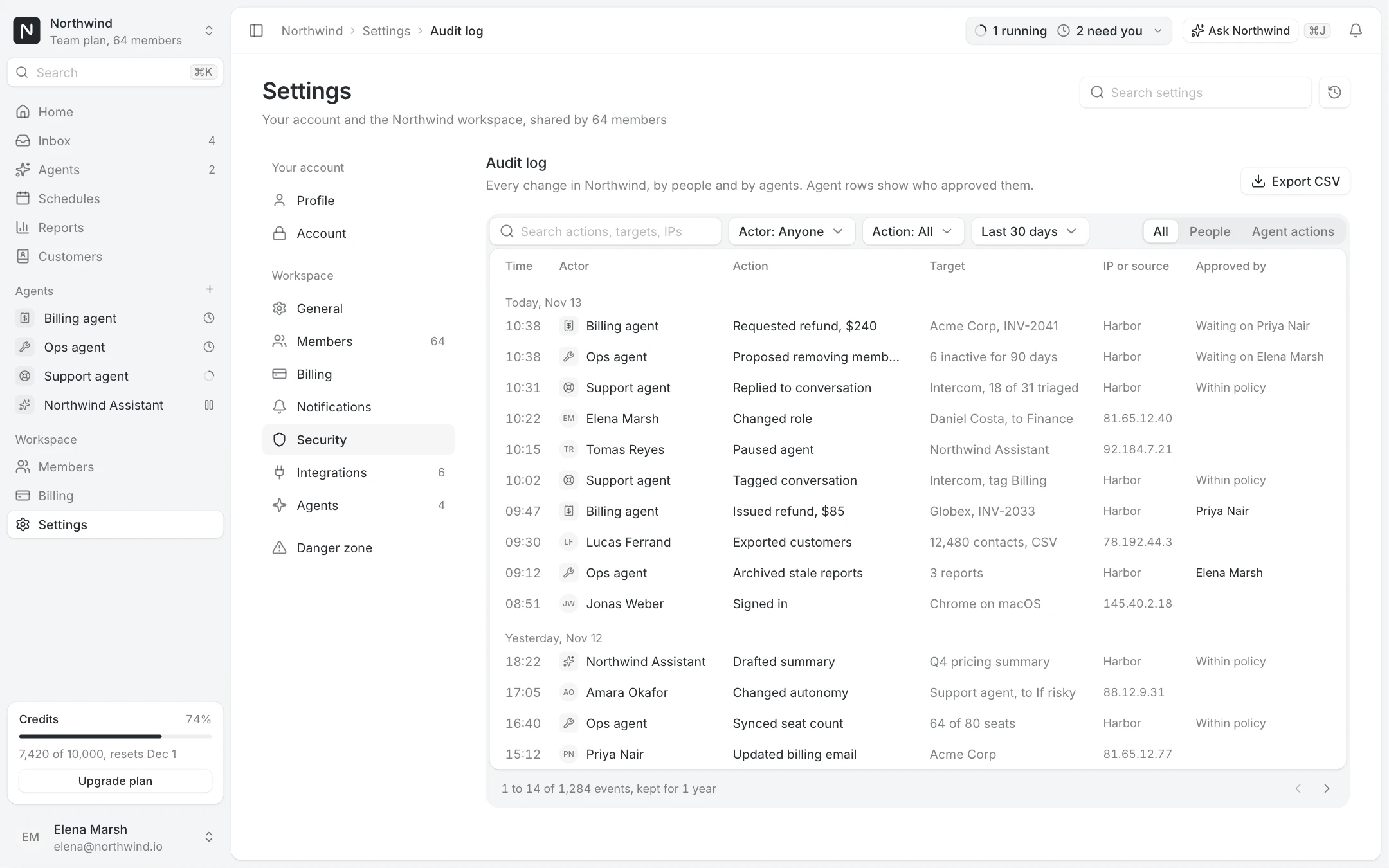
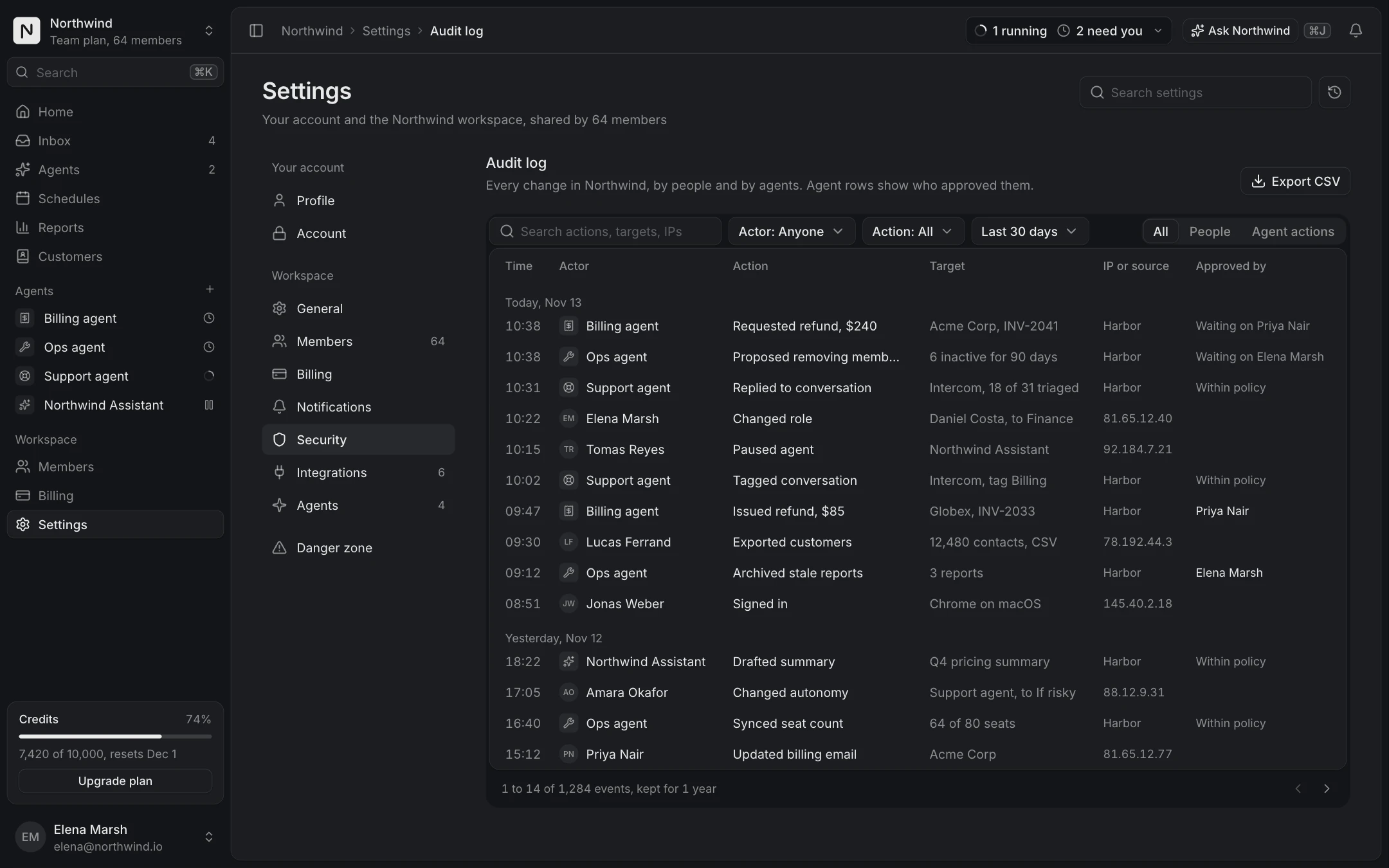
Every change by people and agents, with who approved each agent action and the before and after.
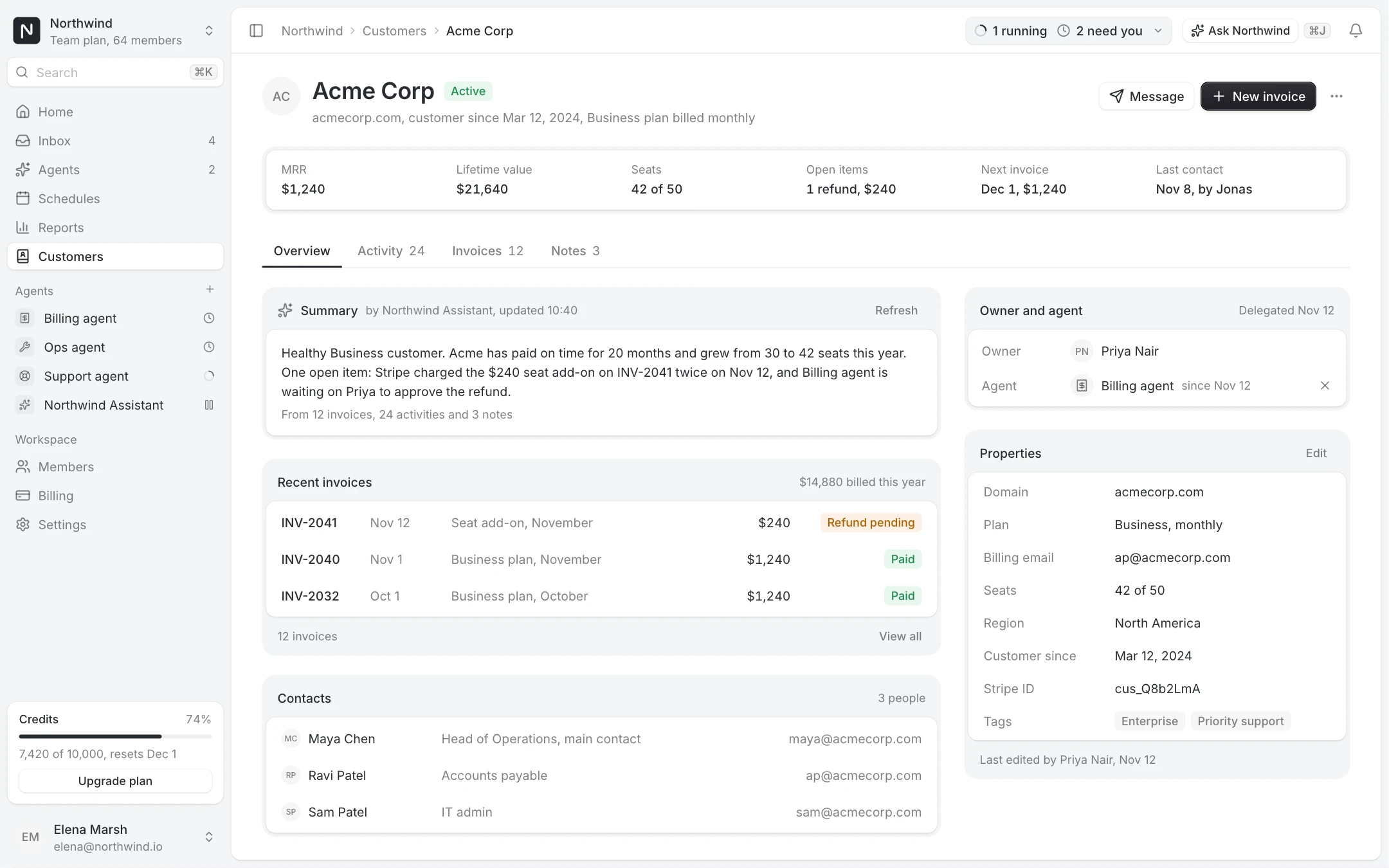
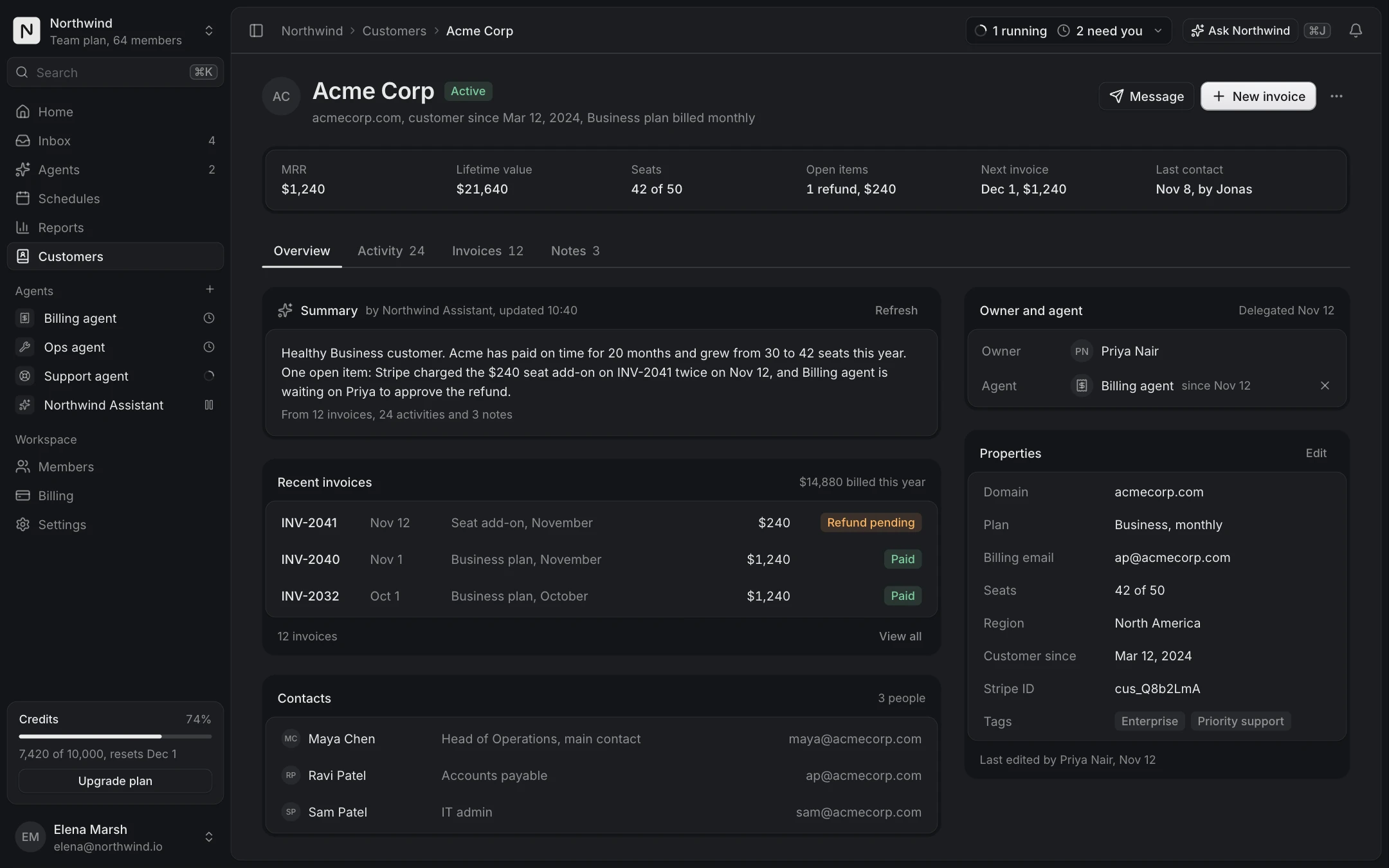
A customer record: key facts, tabs, a properties rail, an activity timeline and an AI summary.
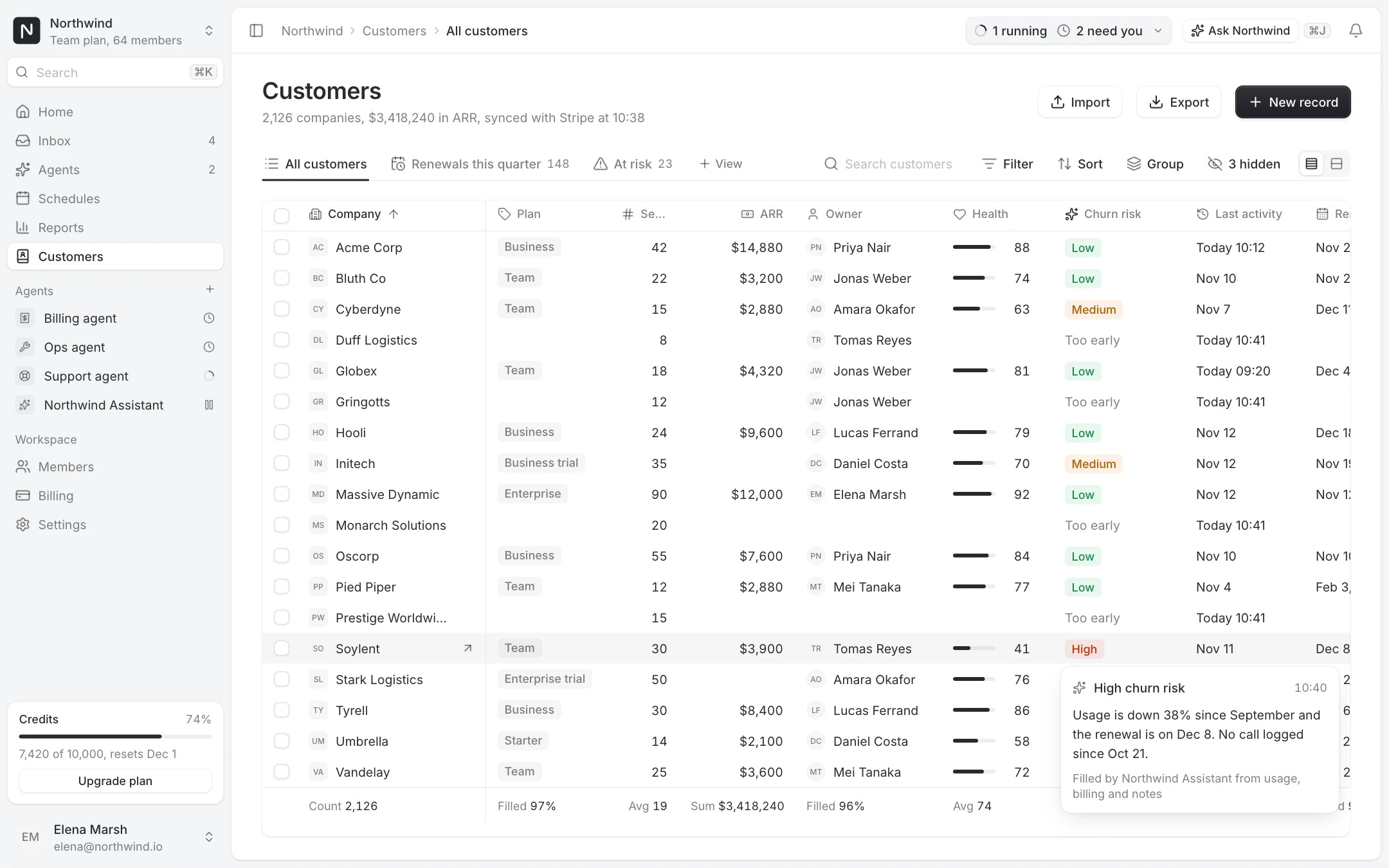
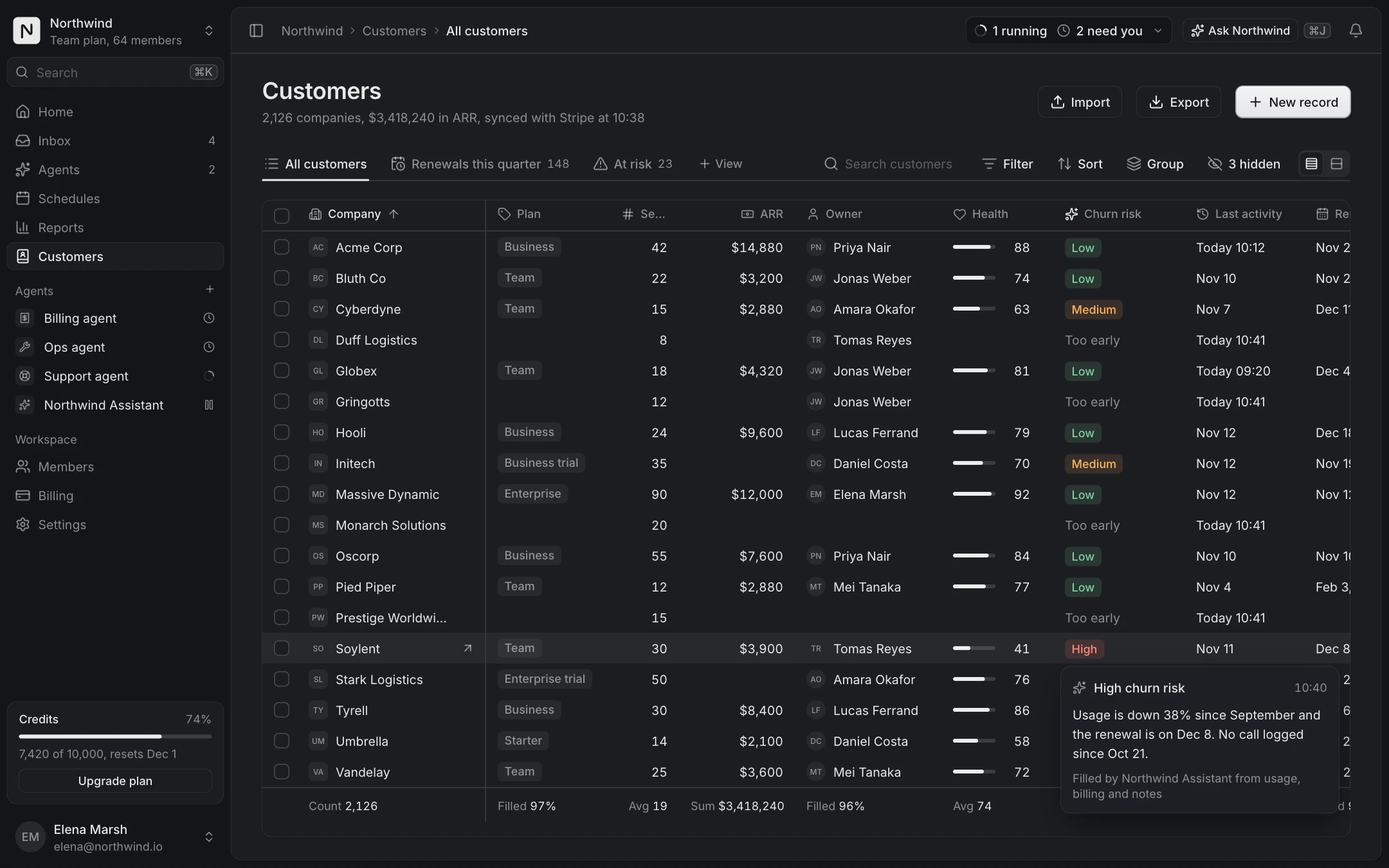
A dense typed grid with saved views, frozen column, grouping, in-place editing and an AI column.
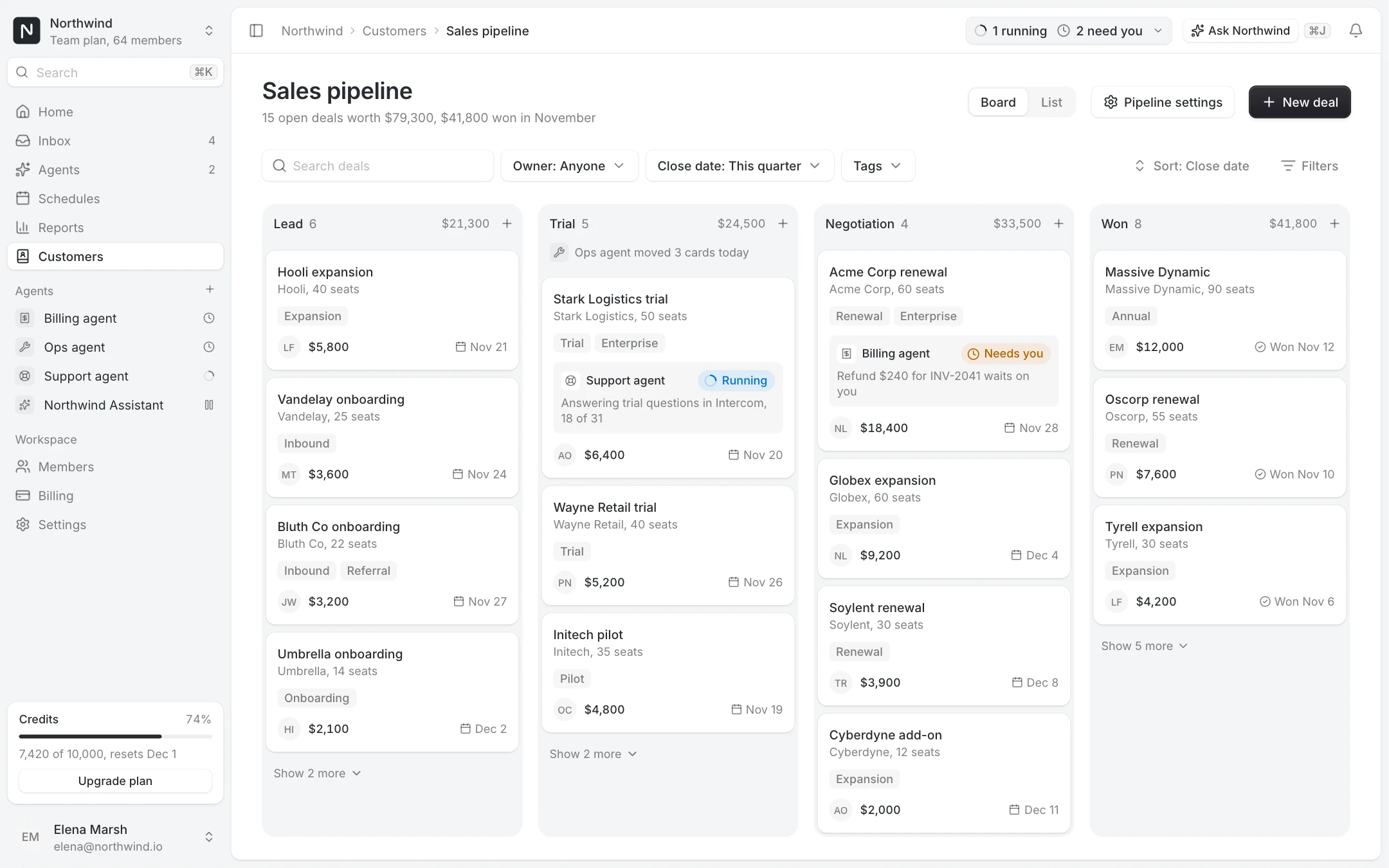
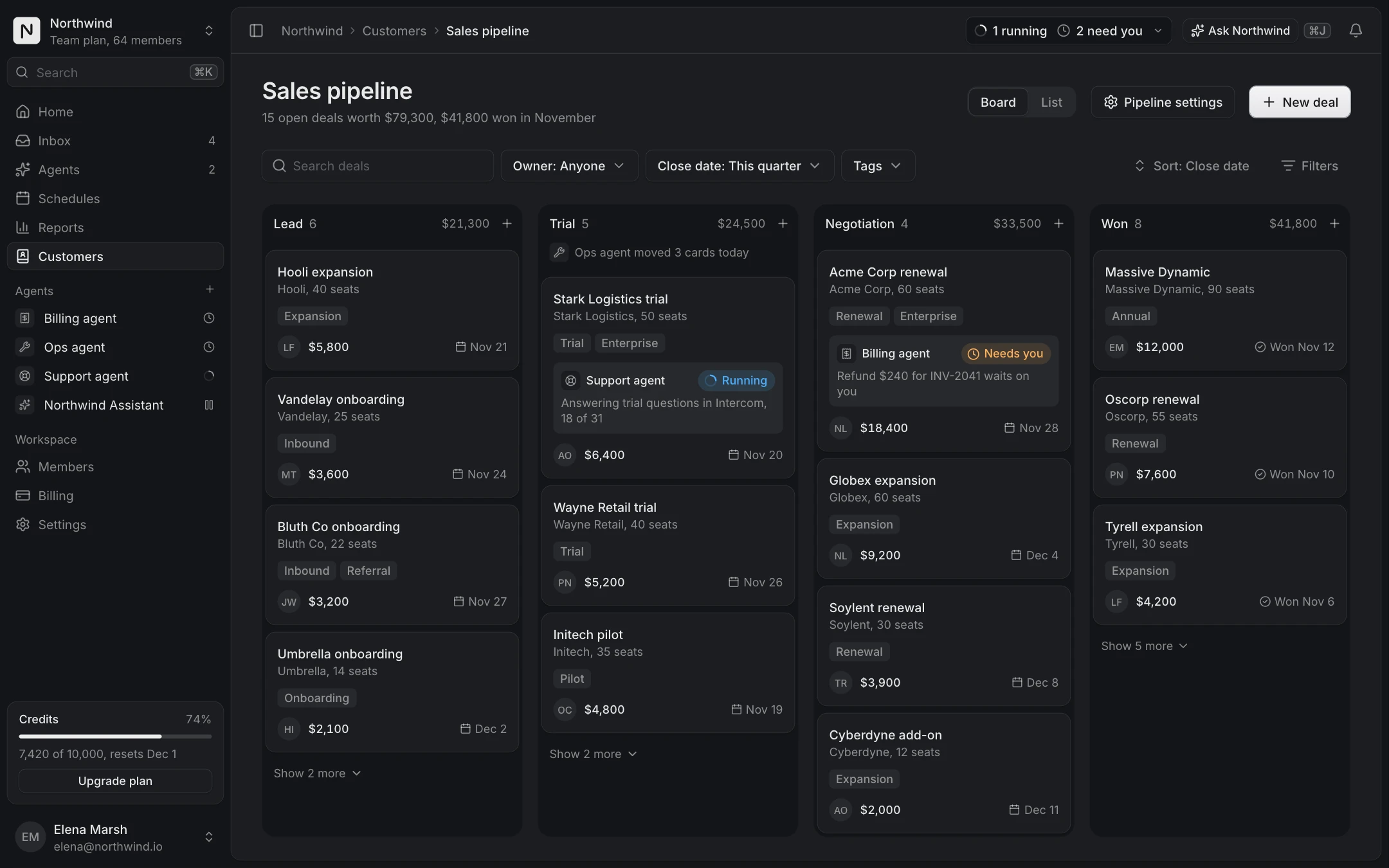
A pipeline board with stage totals, deal cards, agent-delegated cards and a deal sheet.
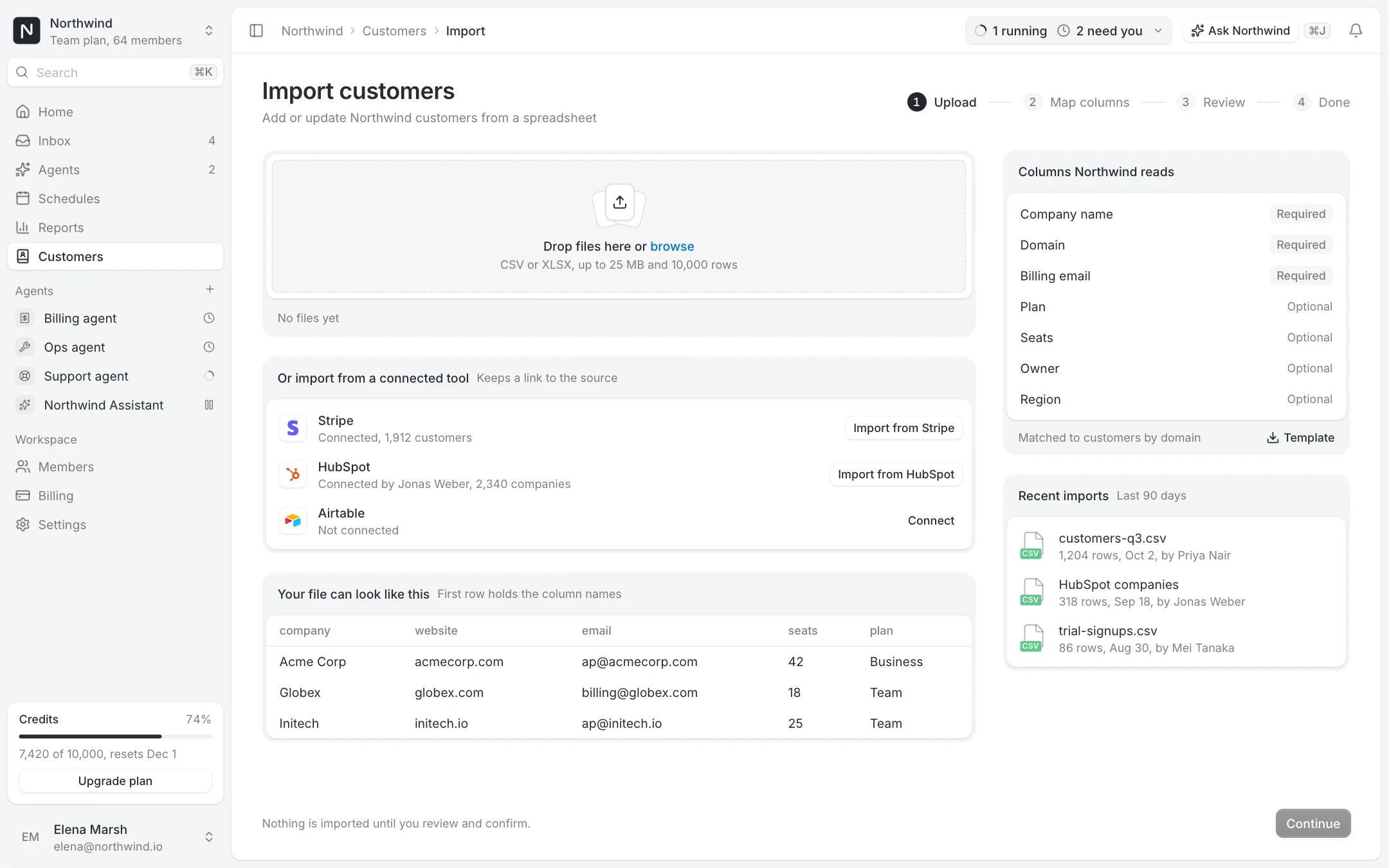
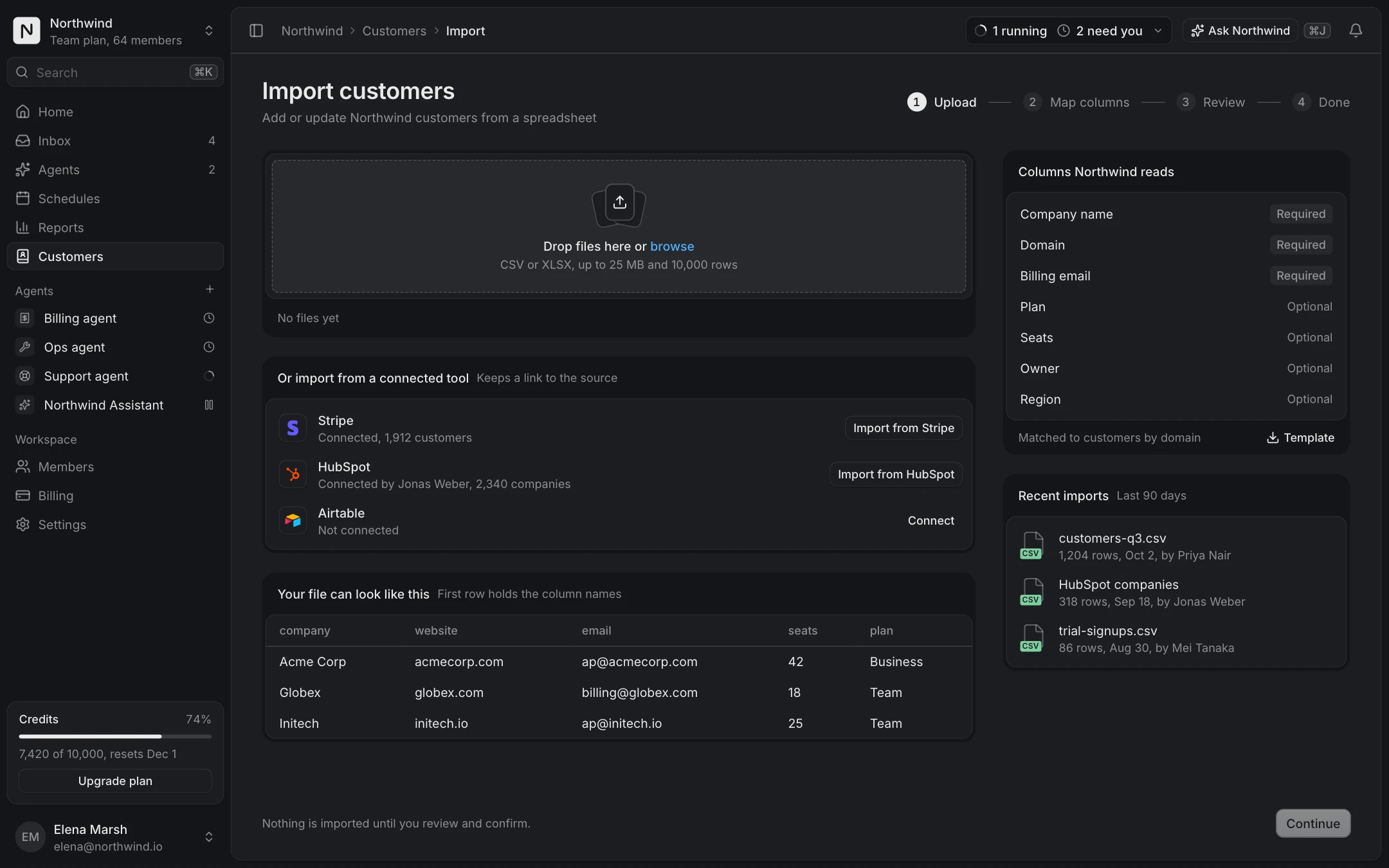
Upload, map columns with the assistant, review the rows that need a fix, done.
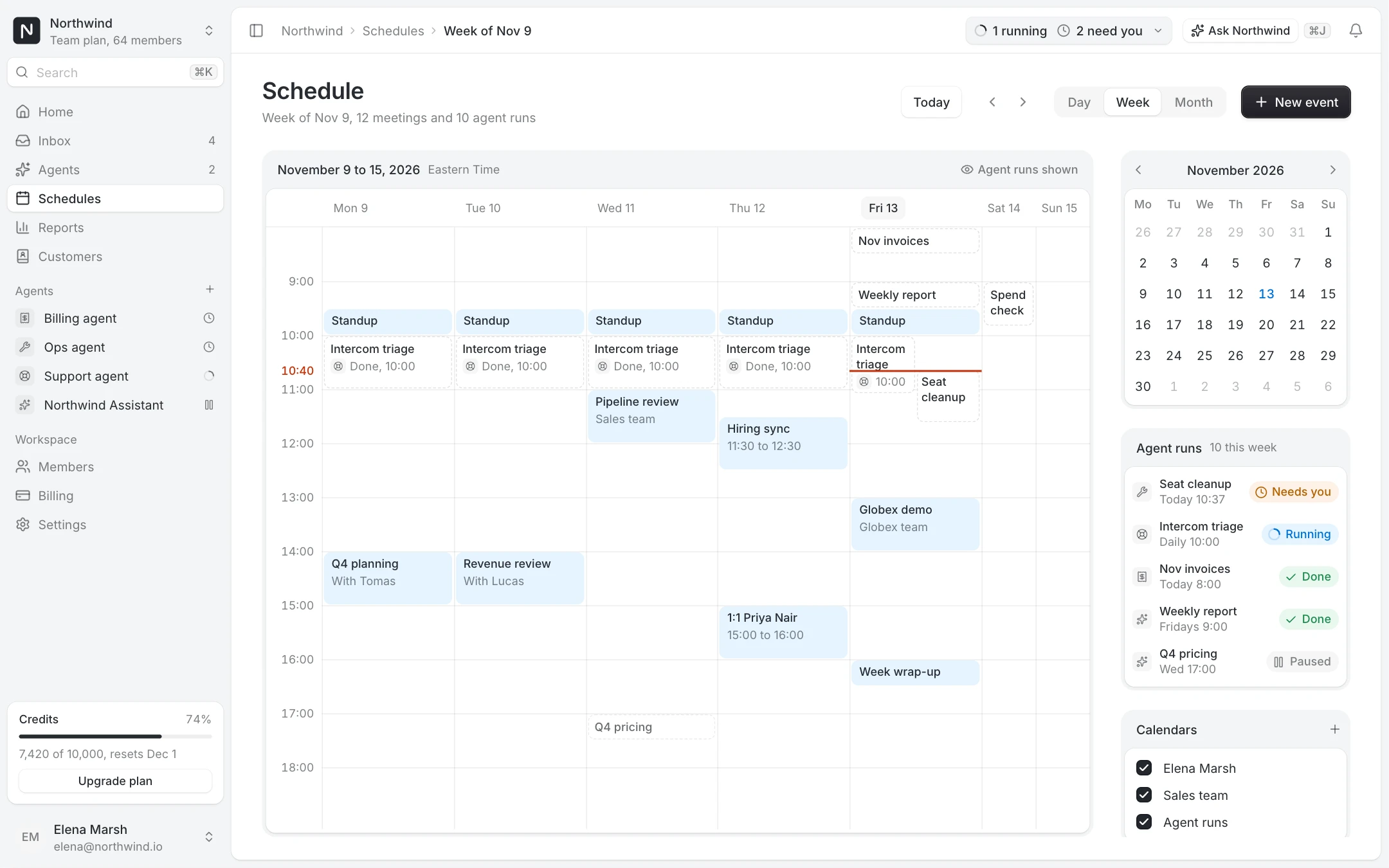
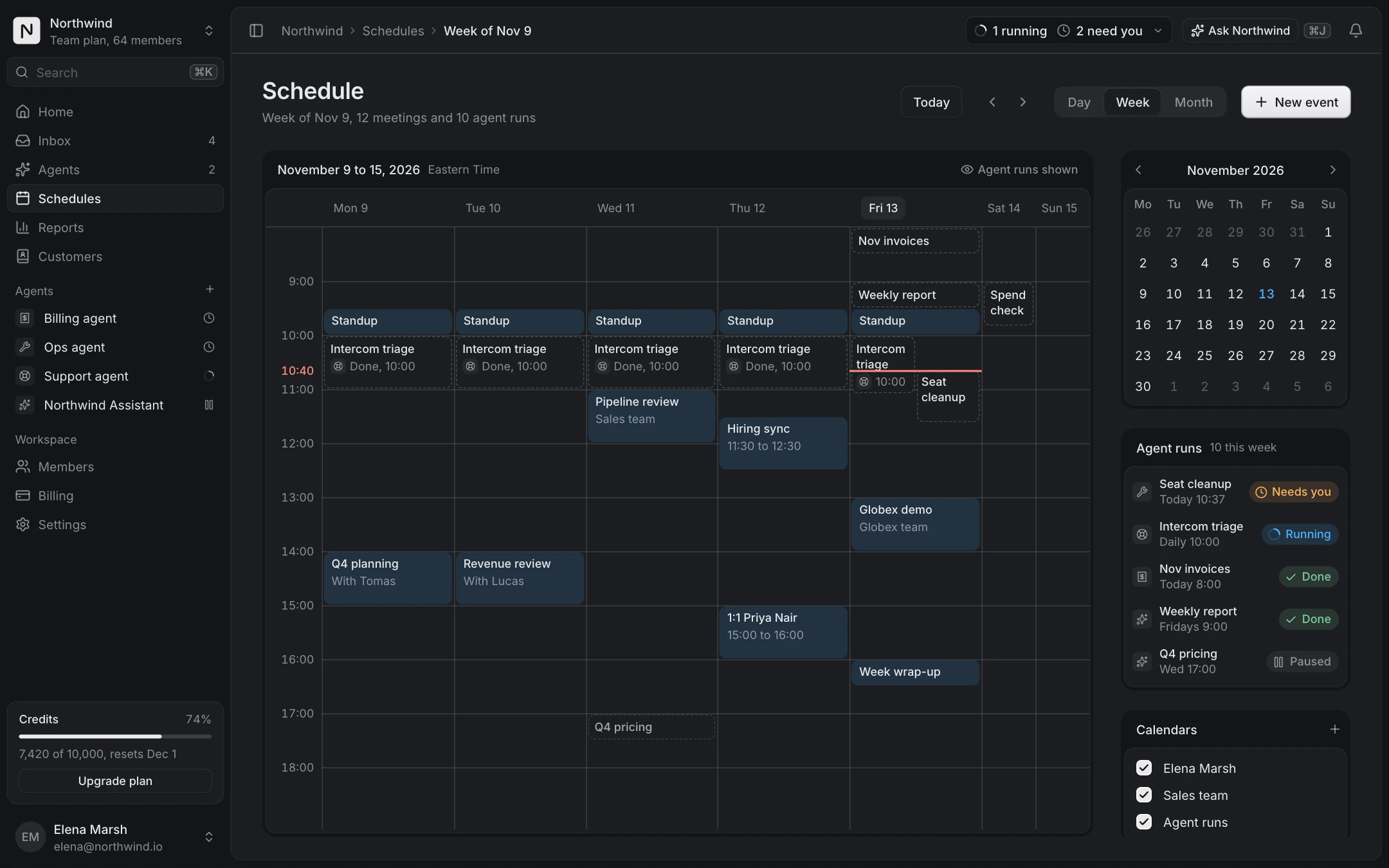
A week grid with meetings and agent runs, a now line, a month view and run popovers.
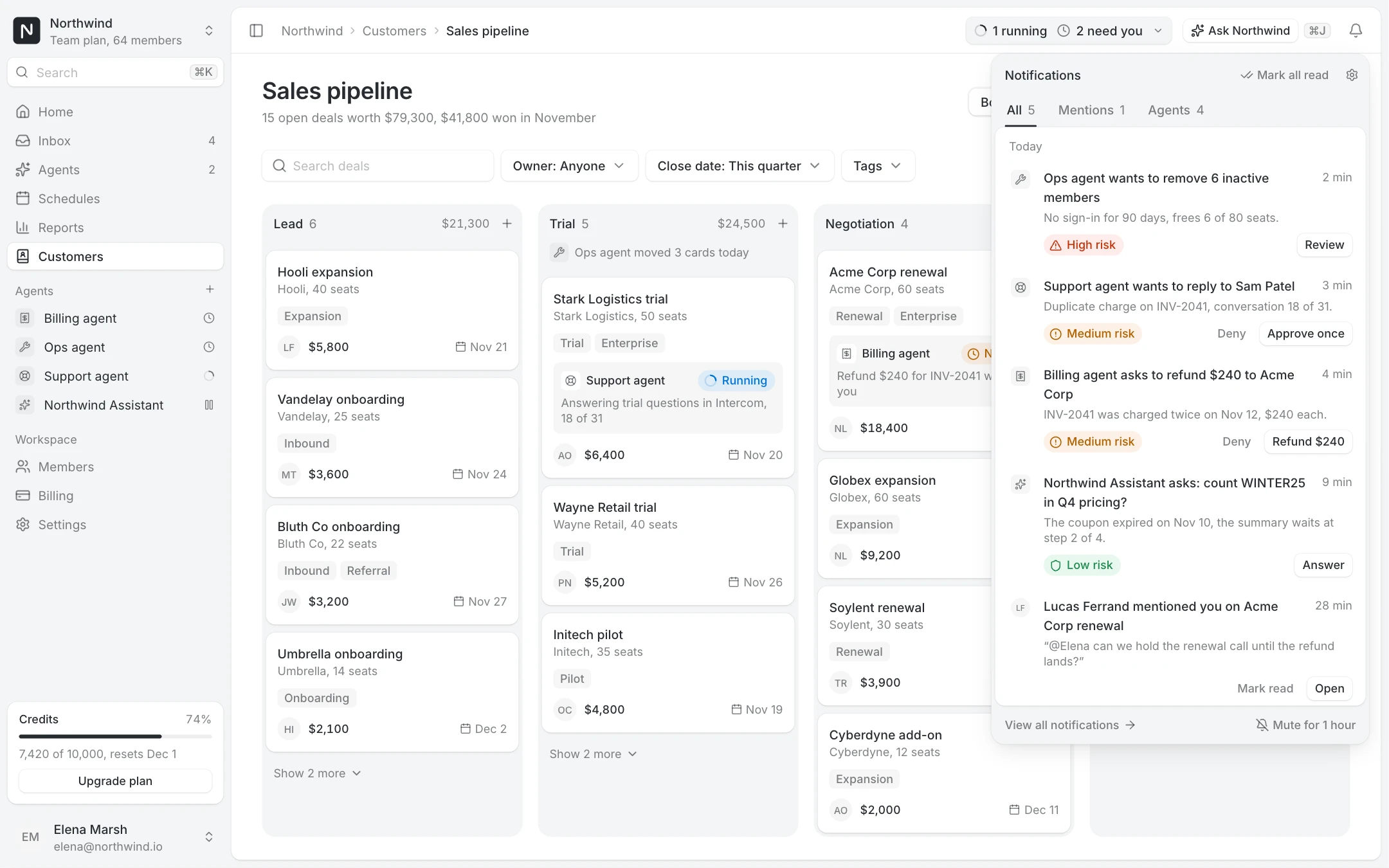
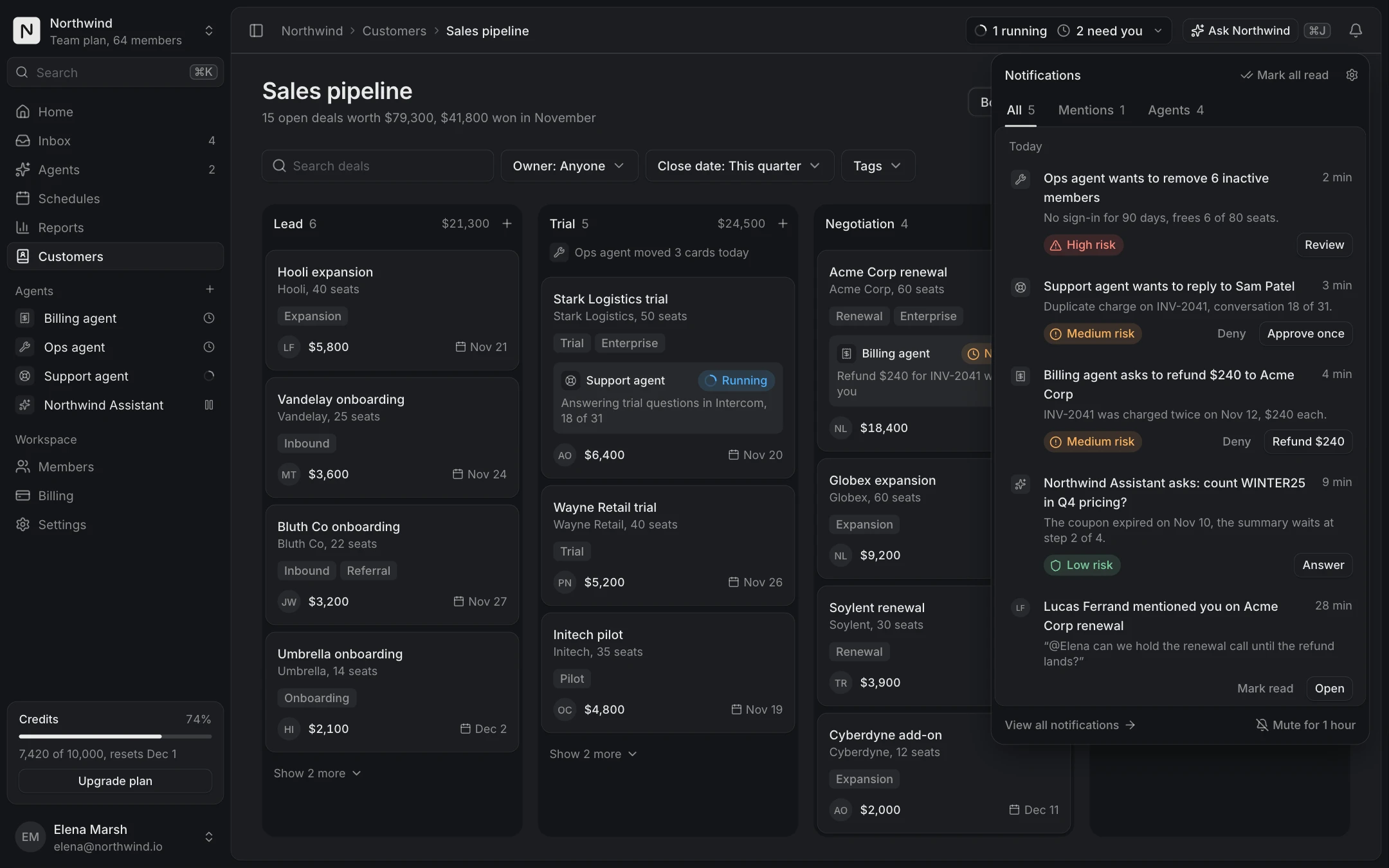
A bell popover and a full page with tabs, inline actions and agent approvals.
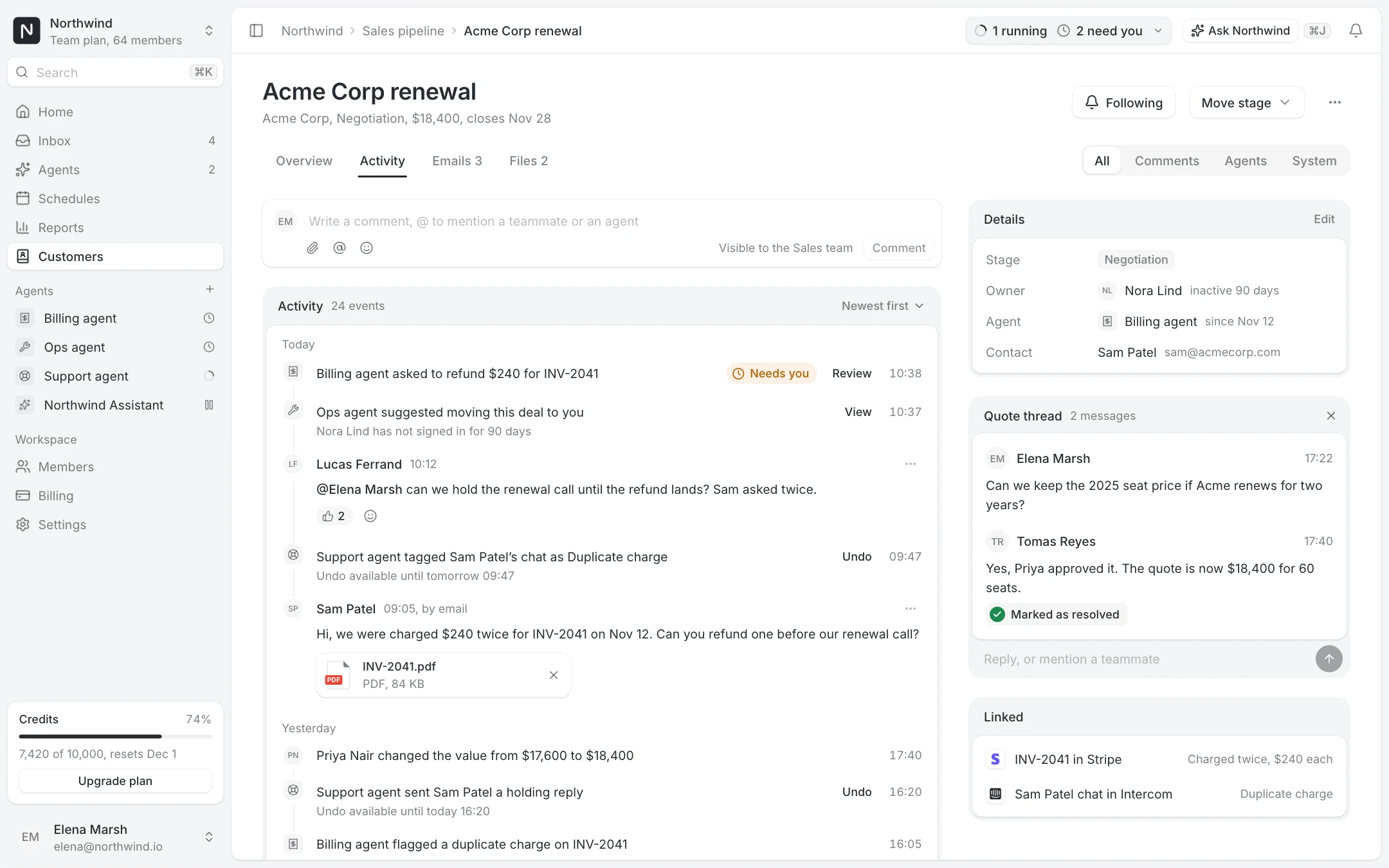
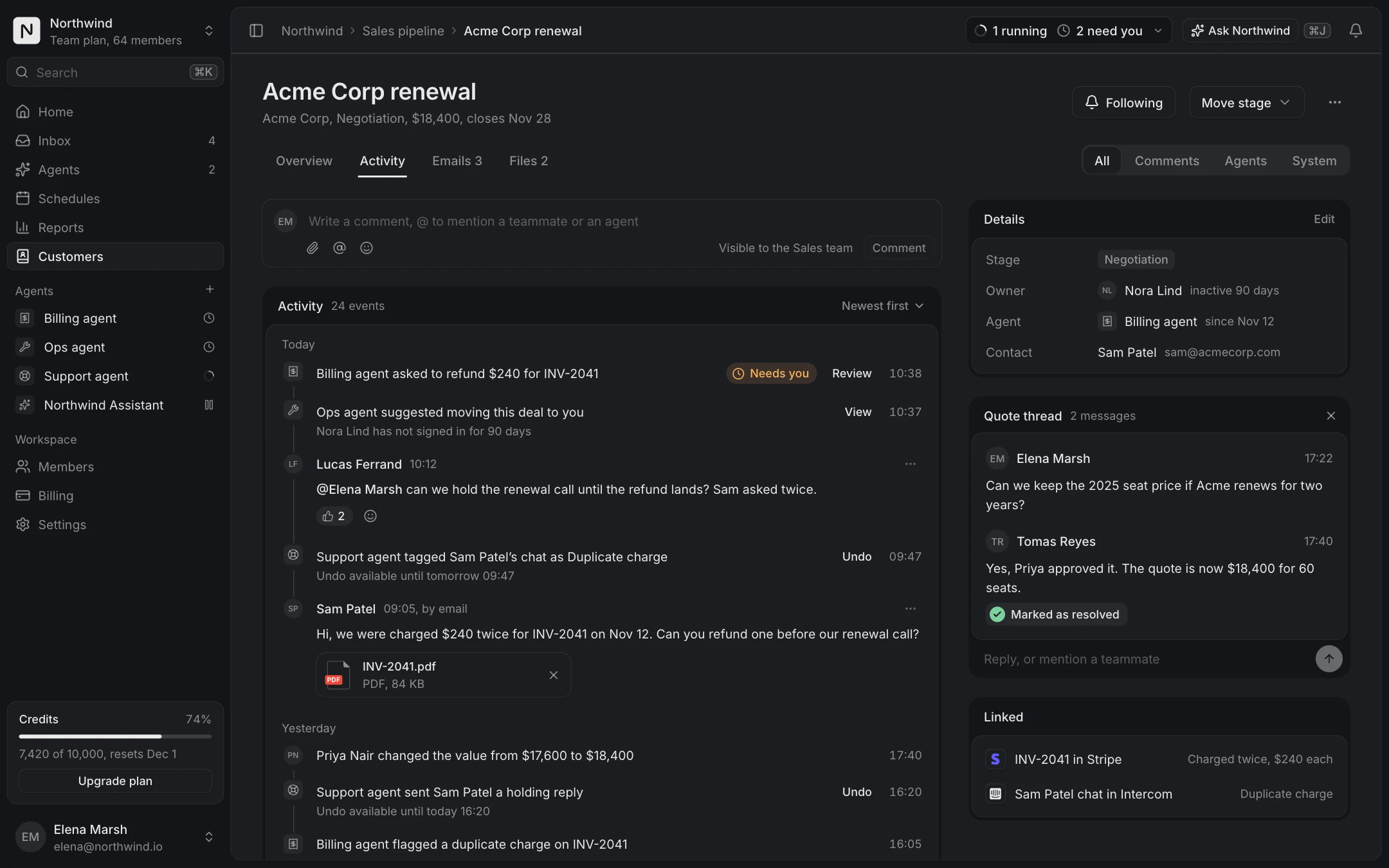
Comments, emails, system and agent events with undo, and a details rail.
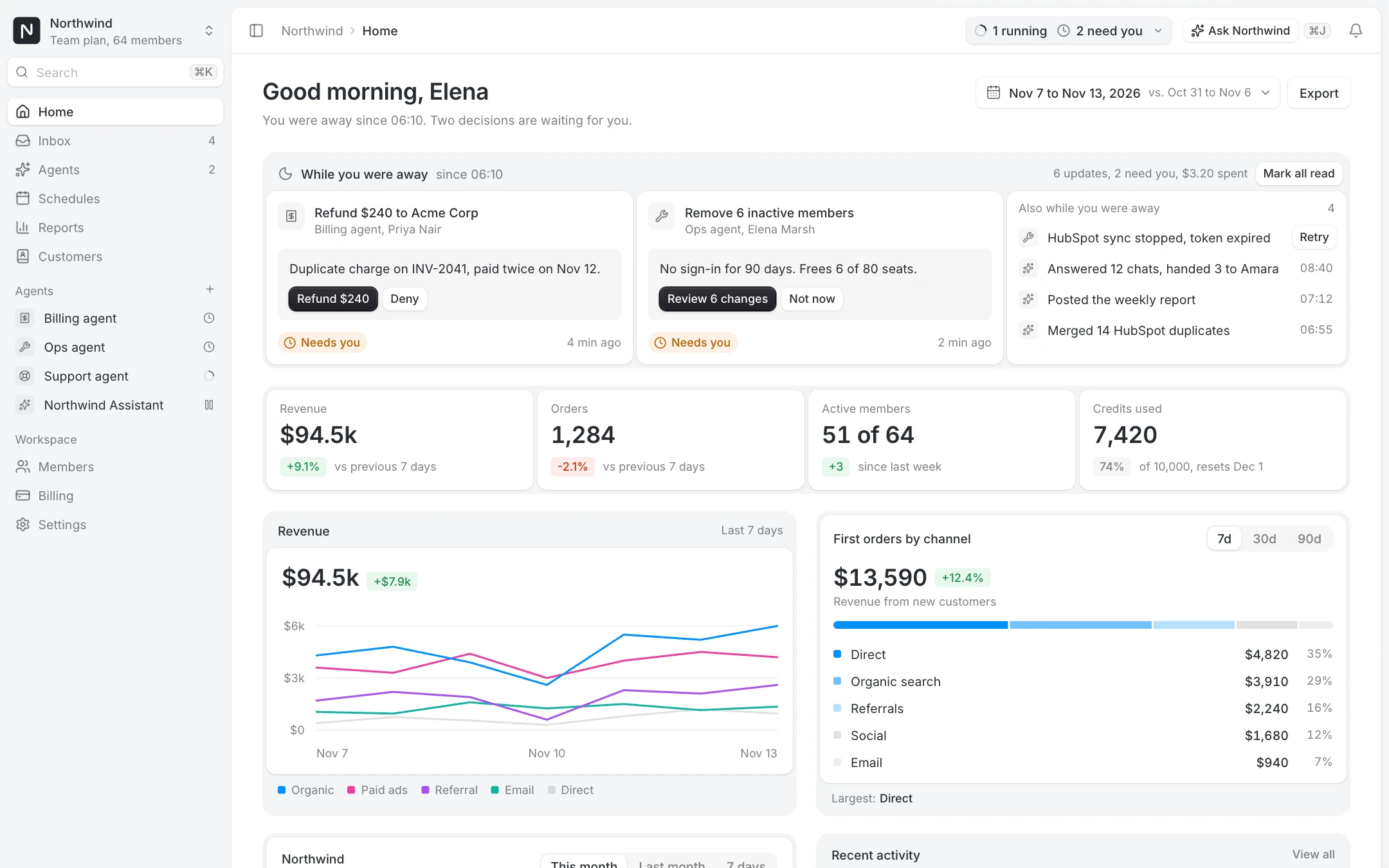
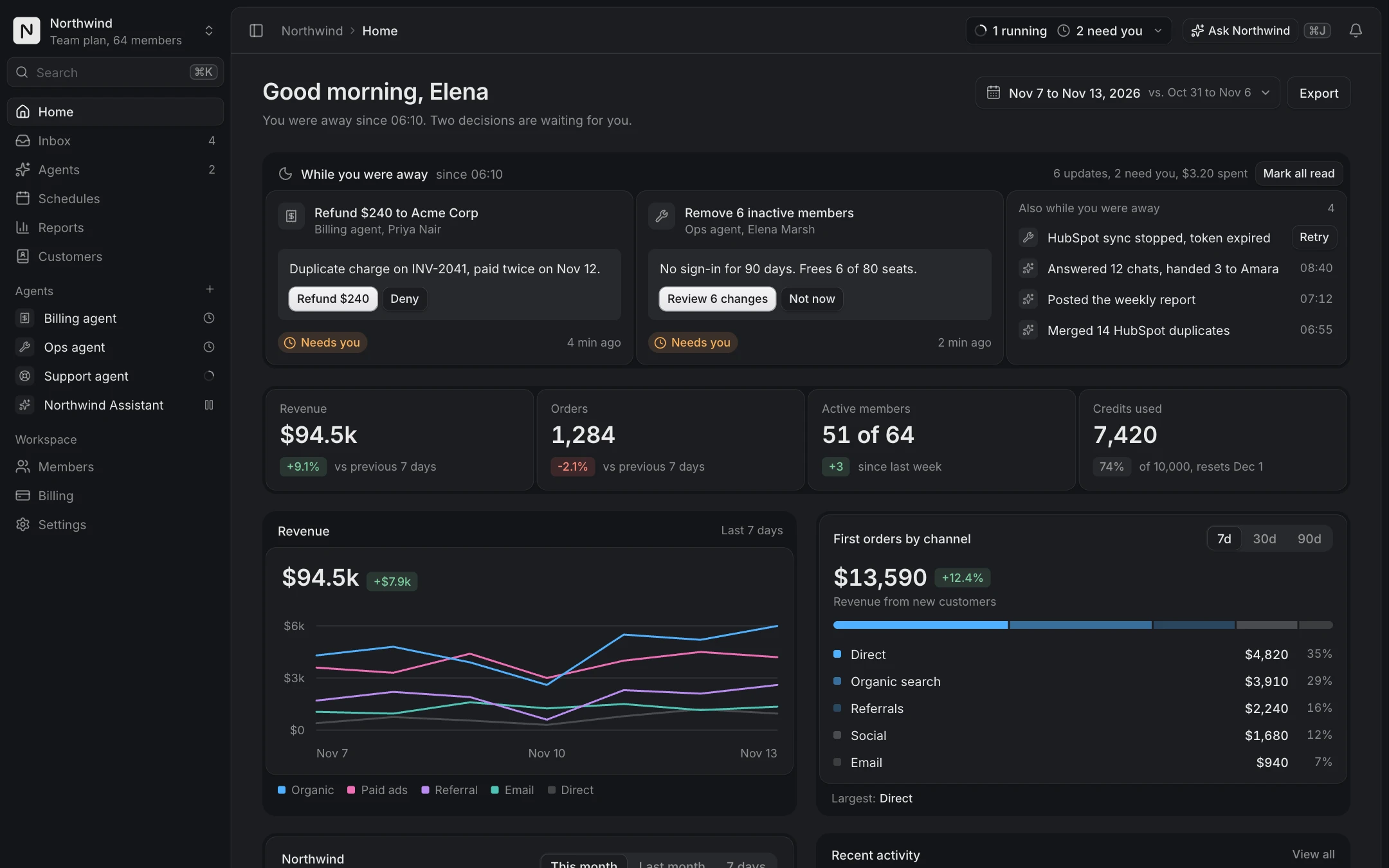
The dashboard when agents worked while you were away, with the decisions to make inline.
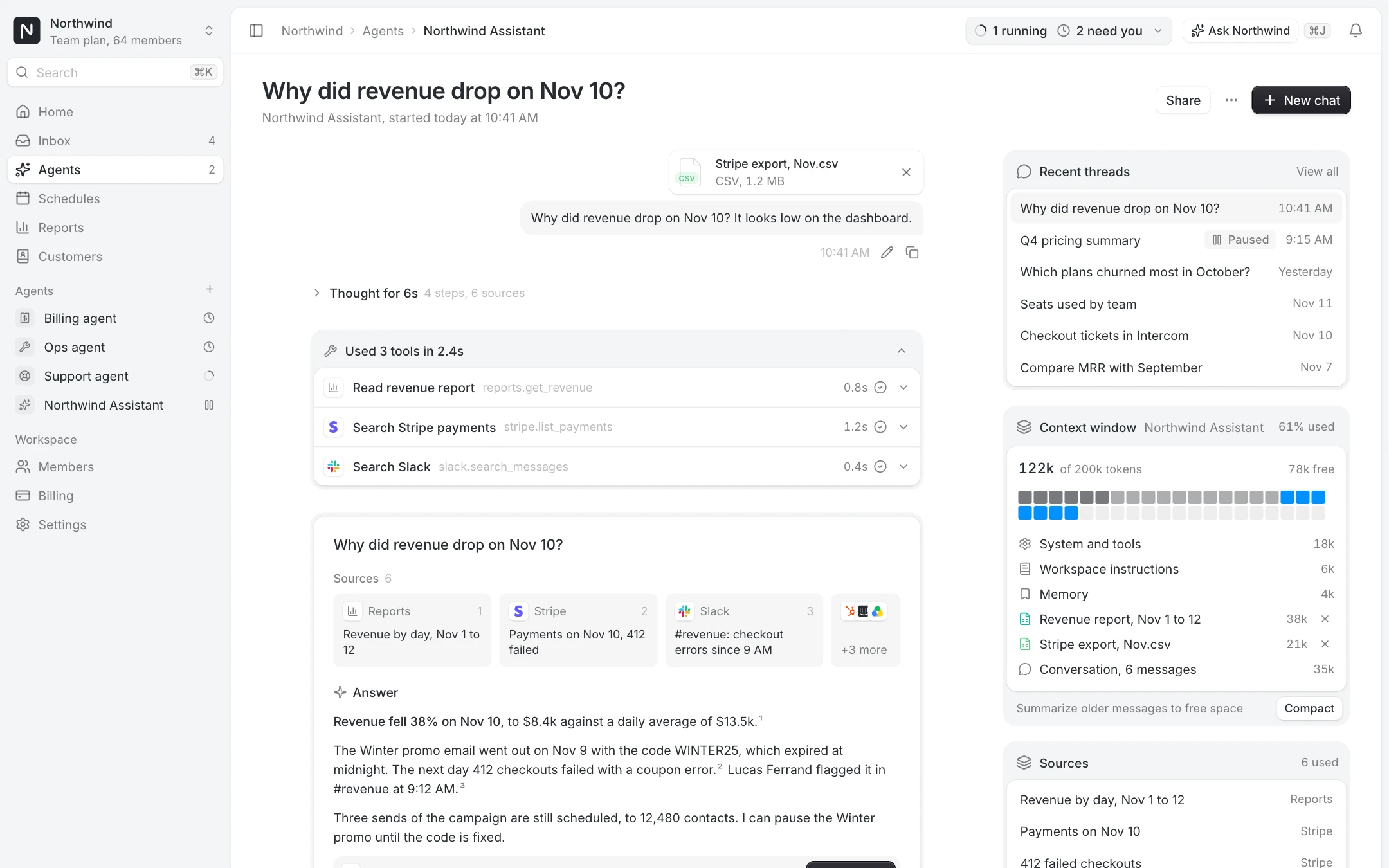
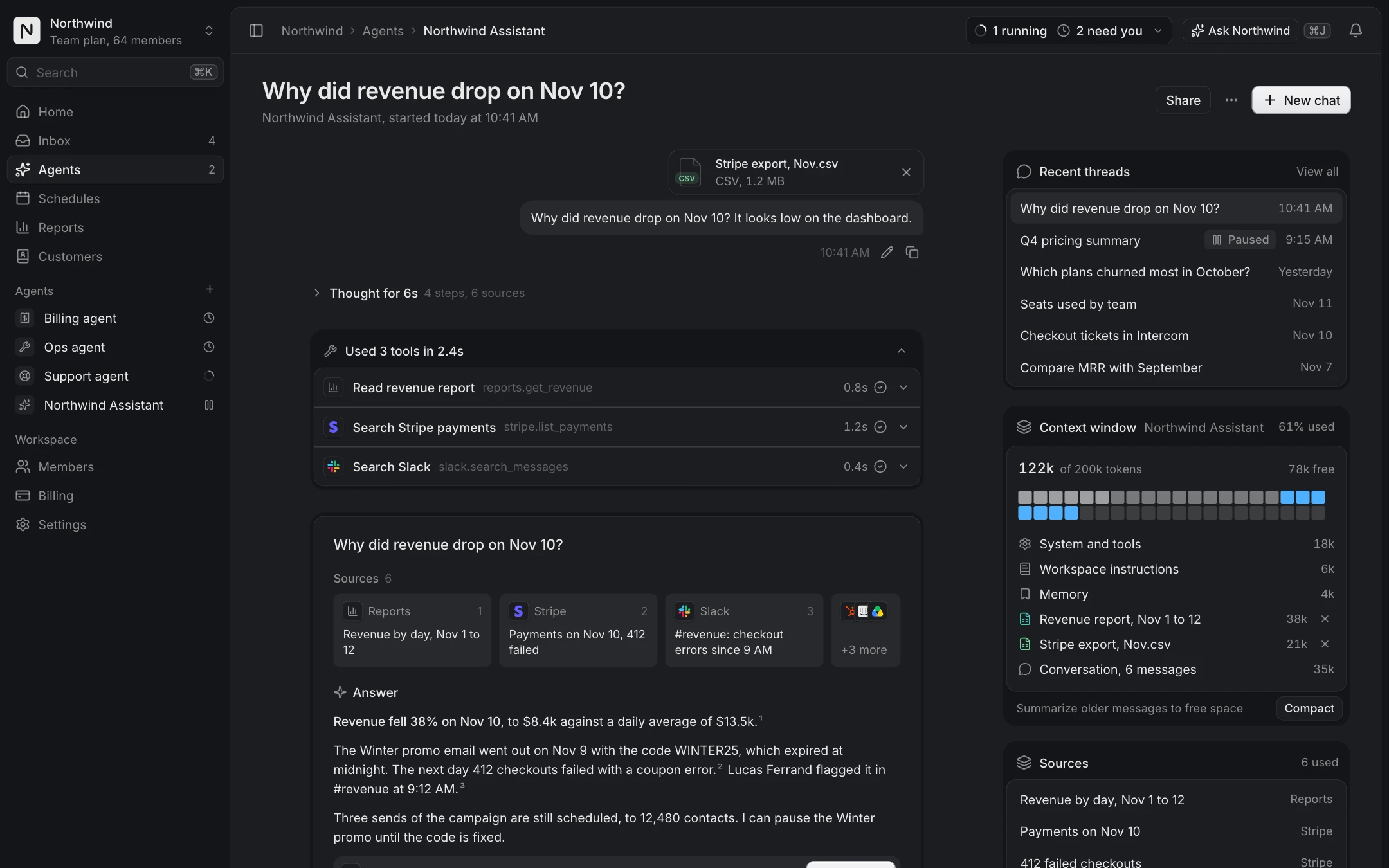
A full-page conversation: reasoning, tool calls, cited answer, approval and the context window.
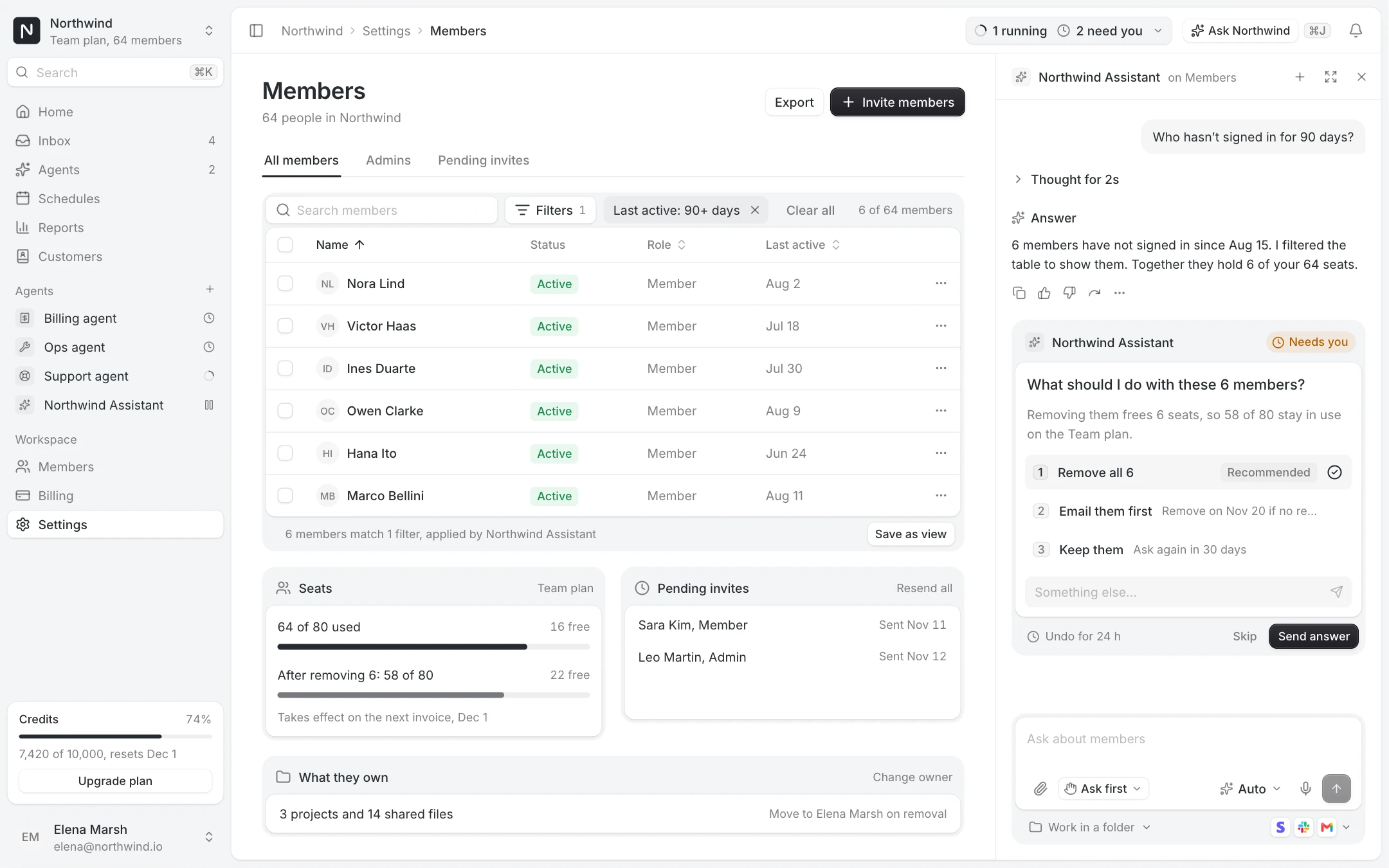
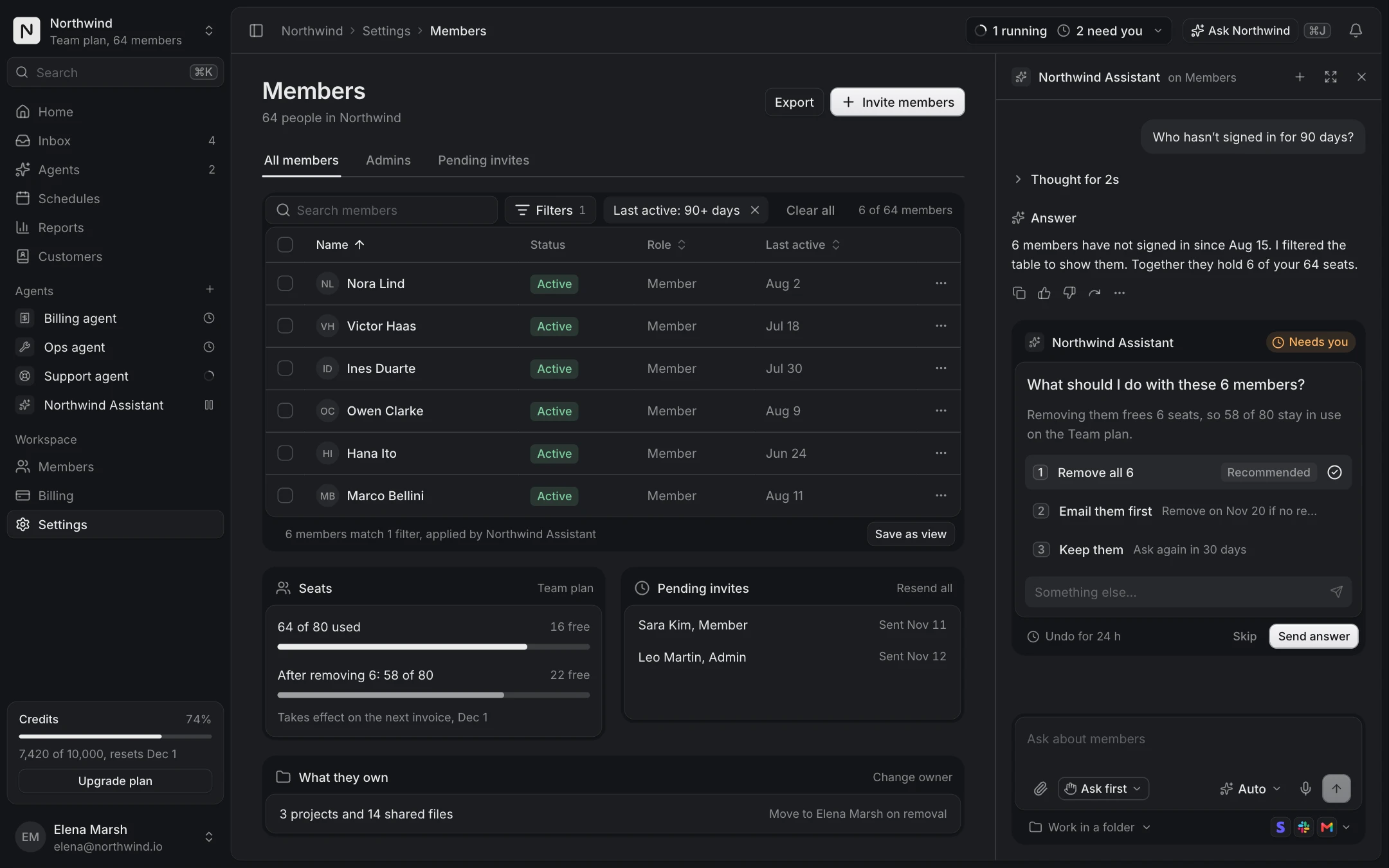
The assistant as a panel docked beside the page, working on the table with you.
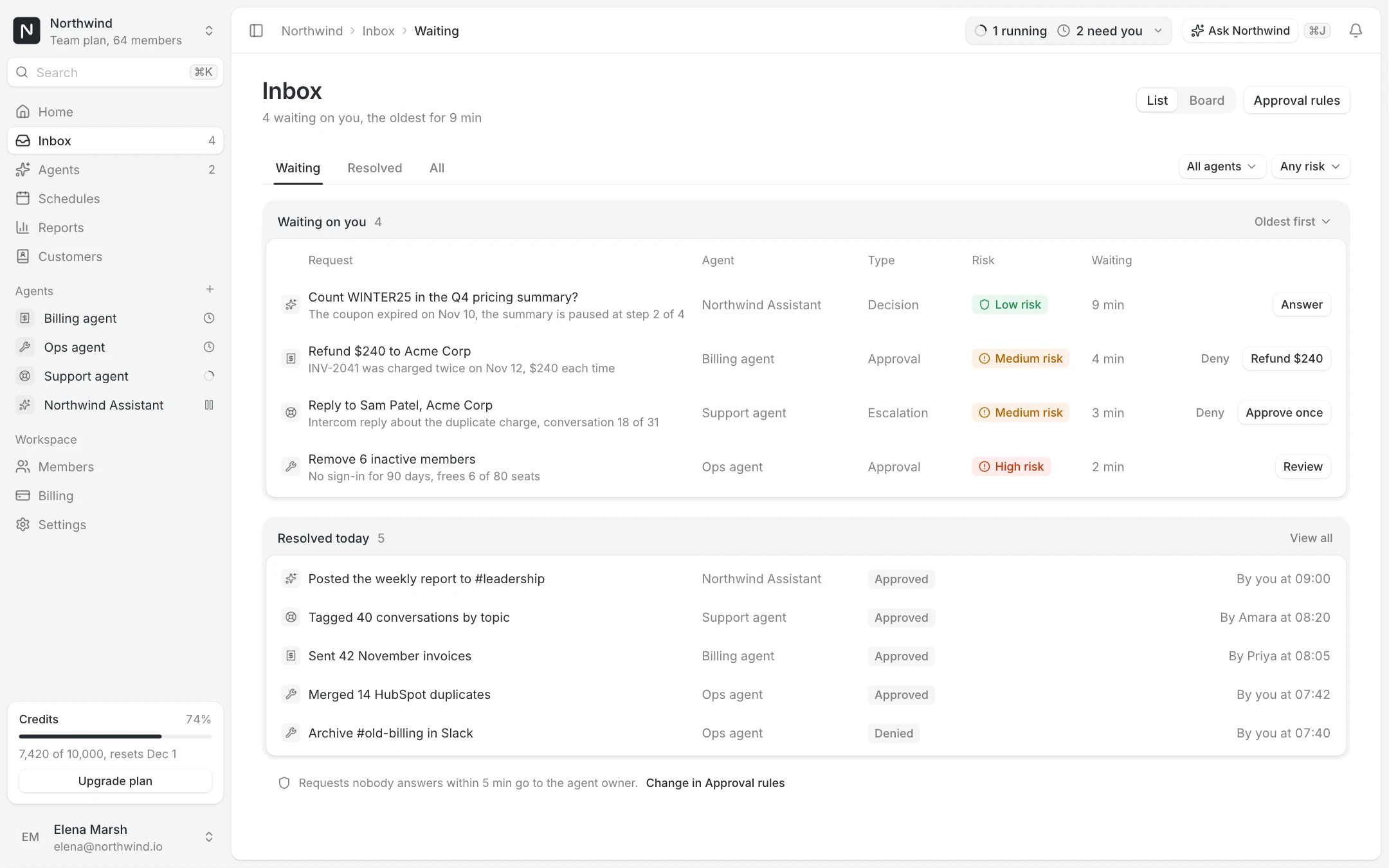
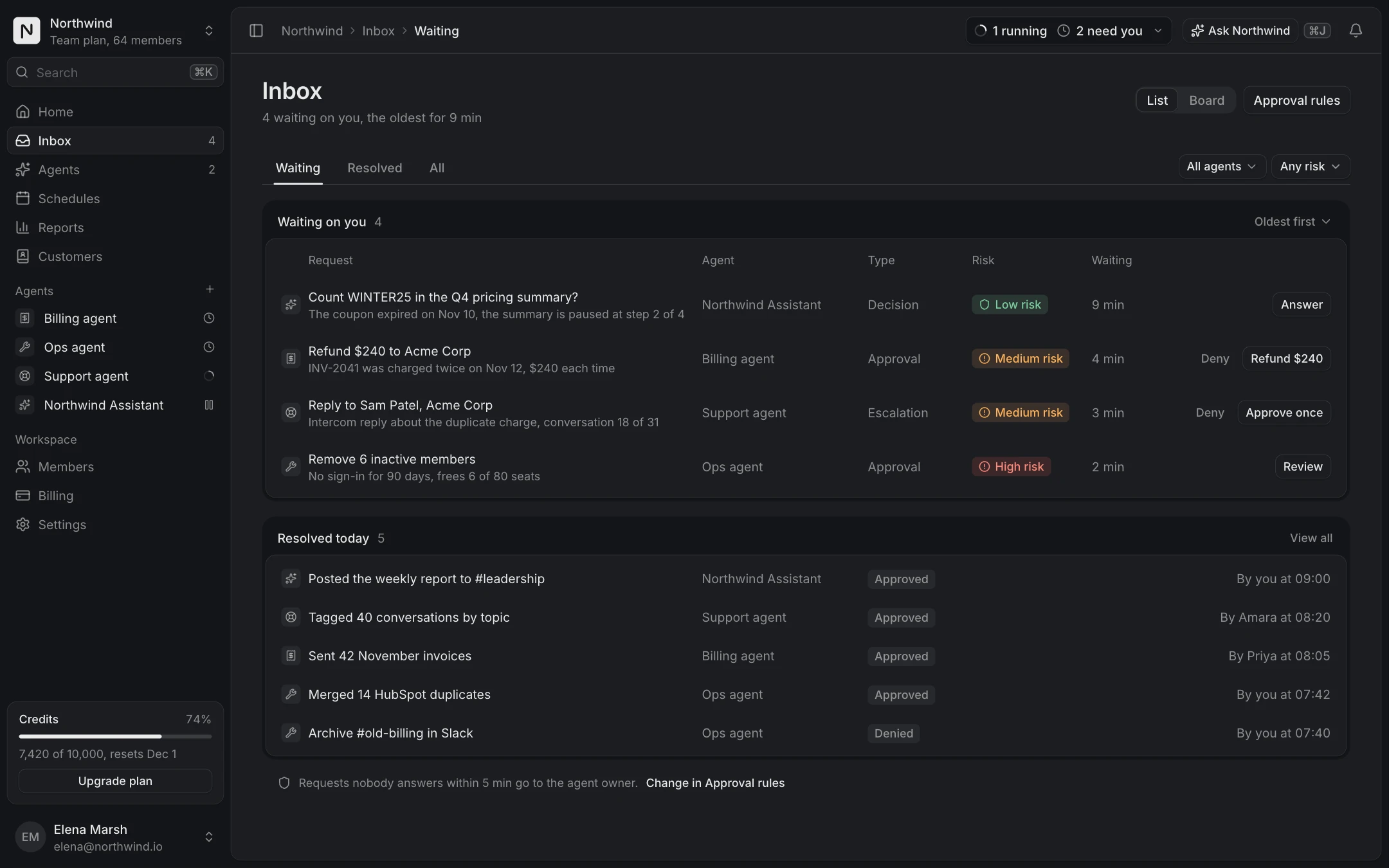
Everything your agents are waiting on, in one queue, with the trail that led to each.
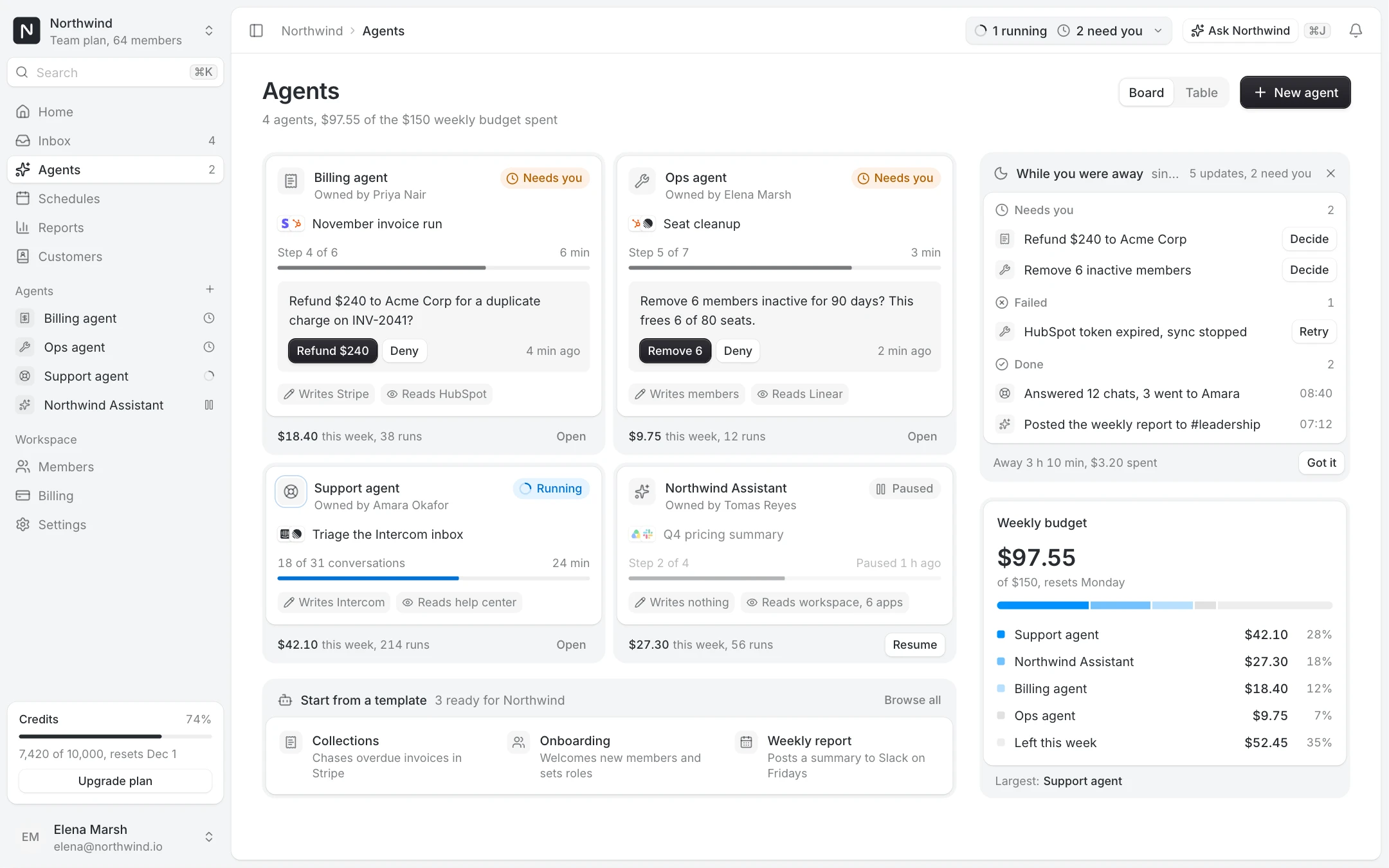
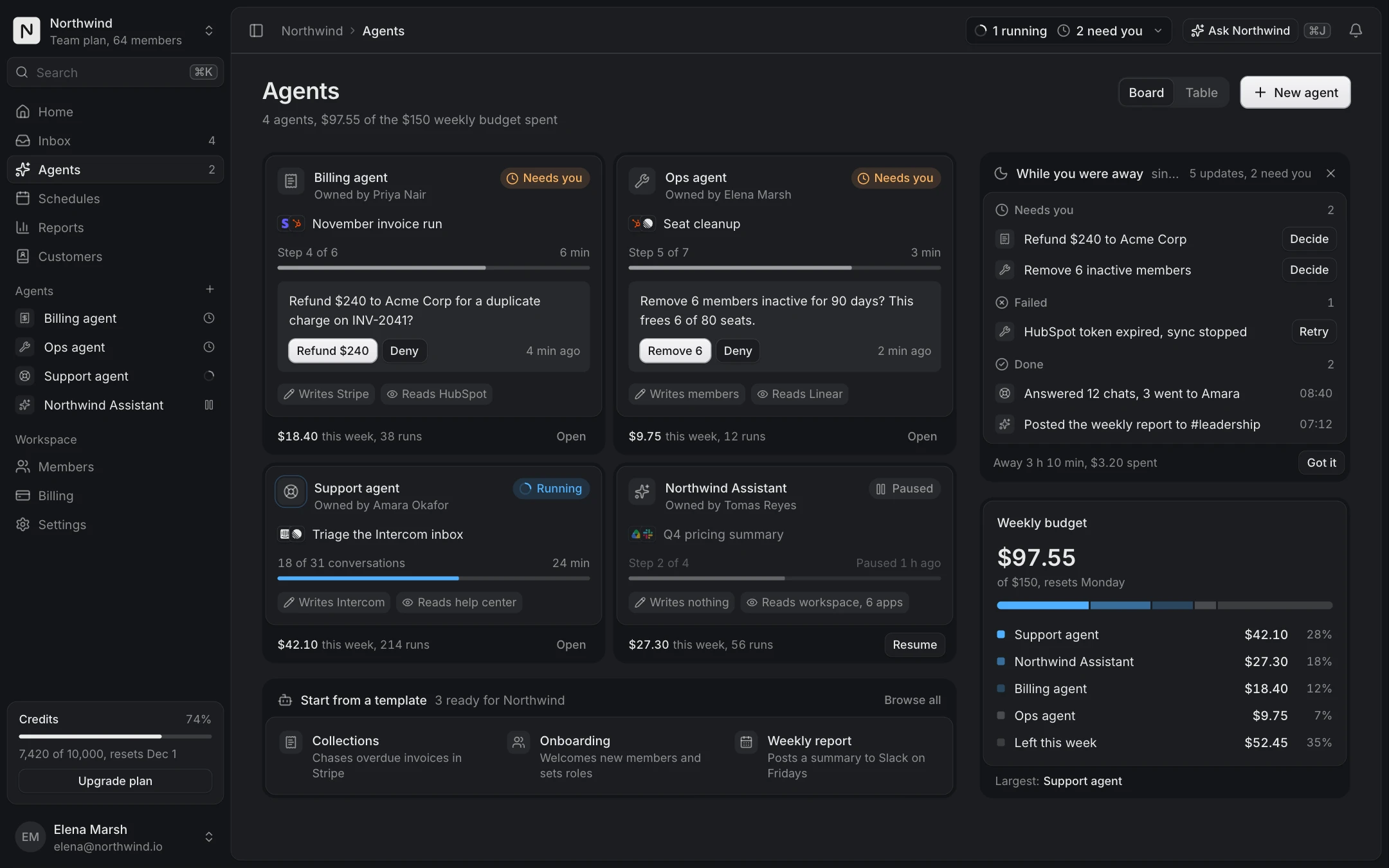
Every agent, what it does, who owns it and what it costs, as a board or a table.
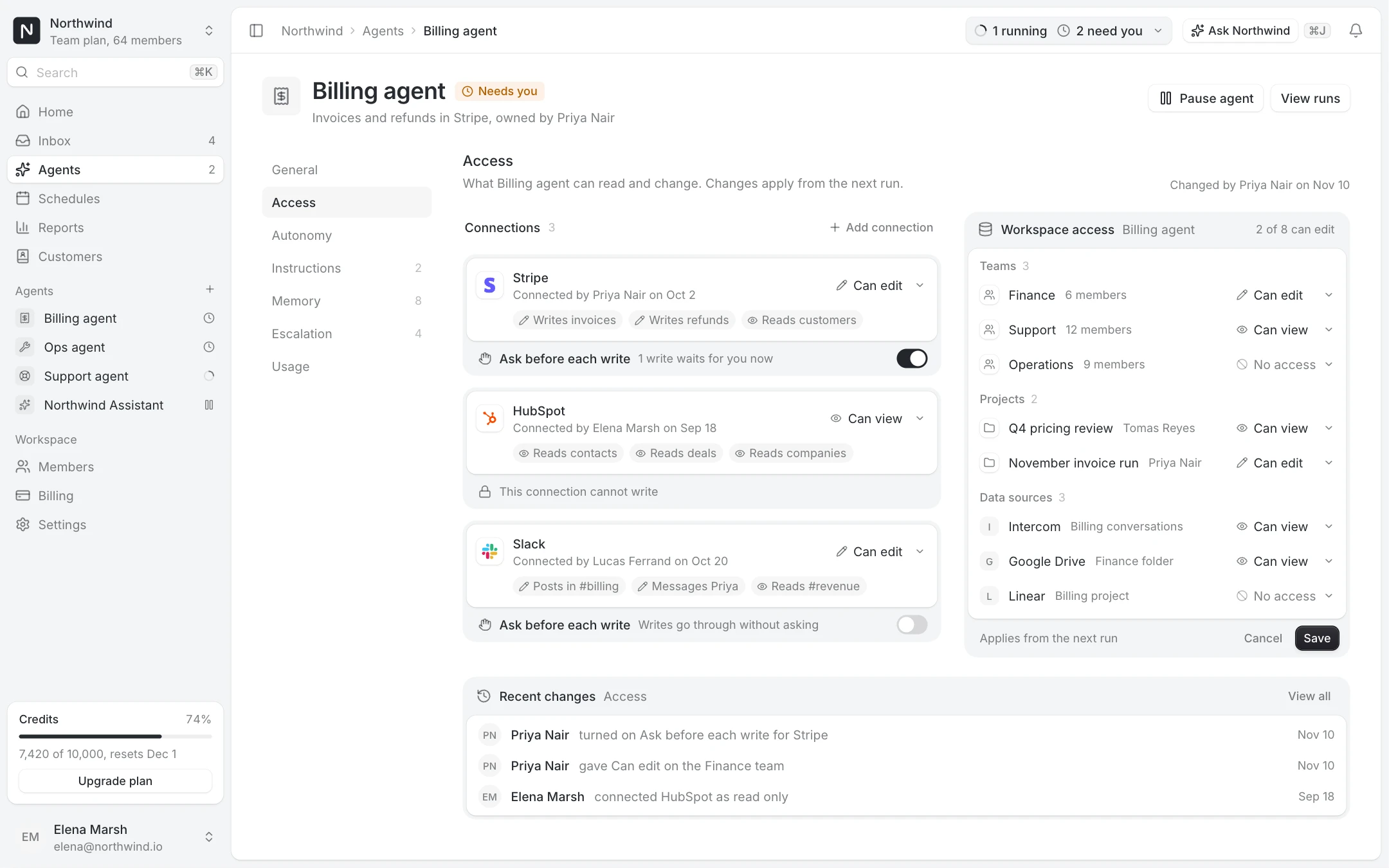
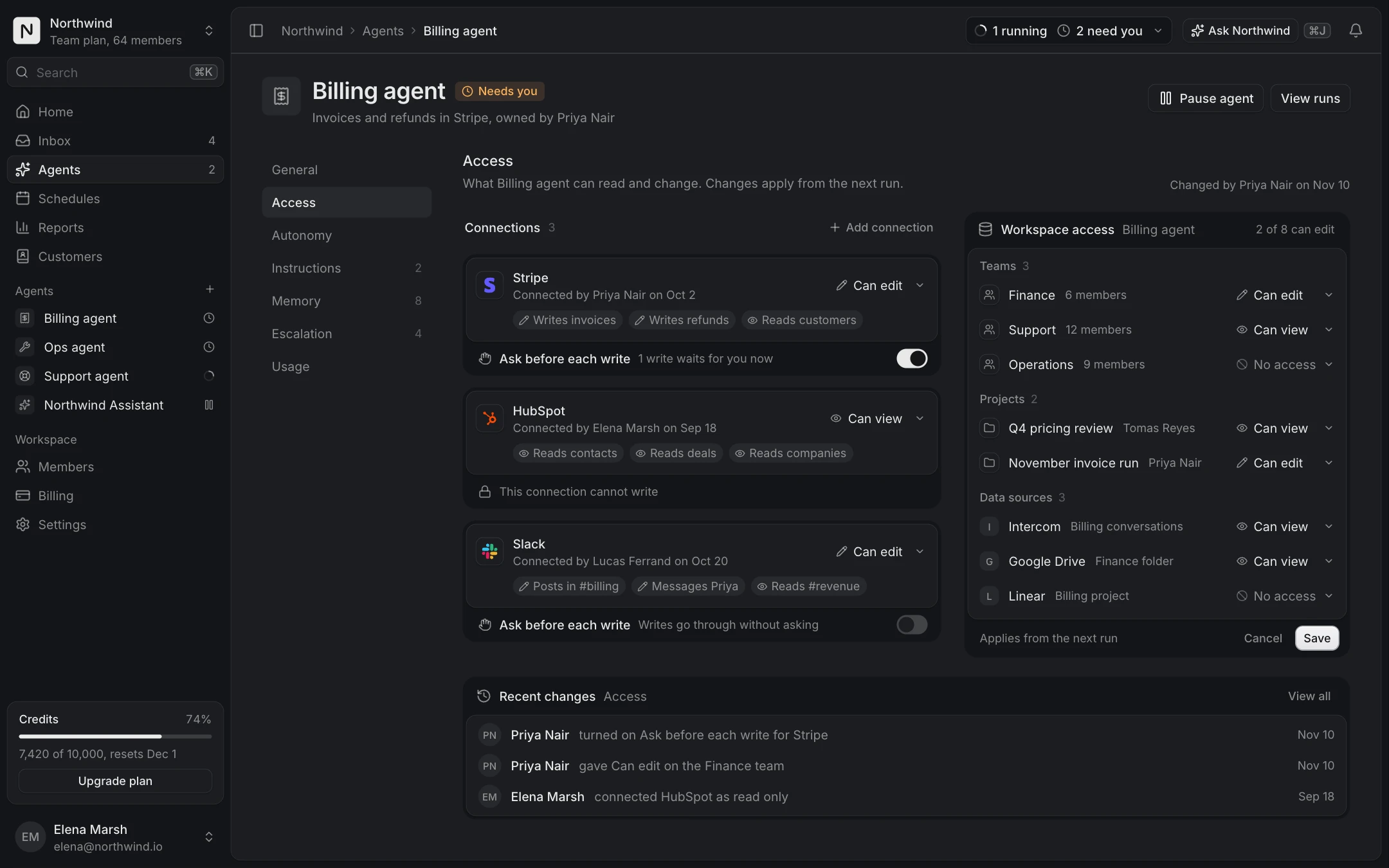
What one agent can touch, how much it may do alone, what it remembers and how it hands over.
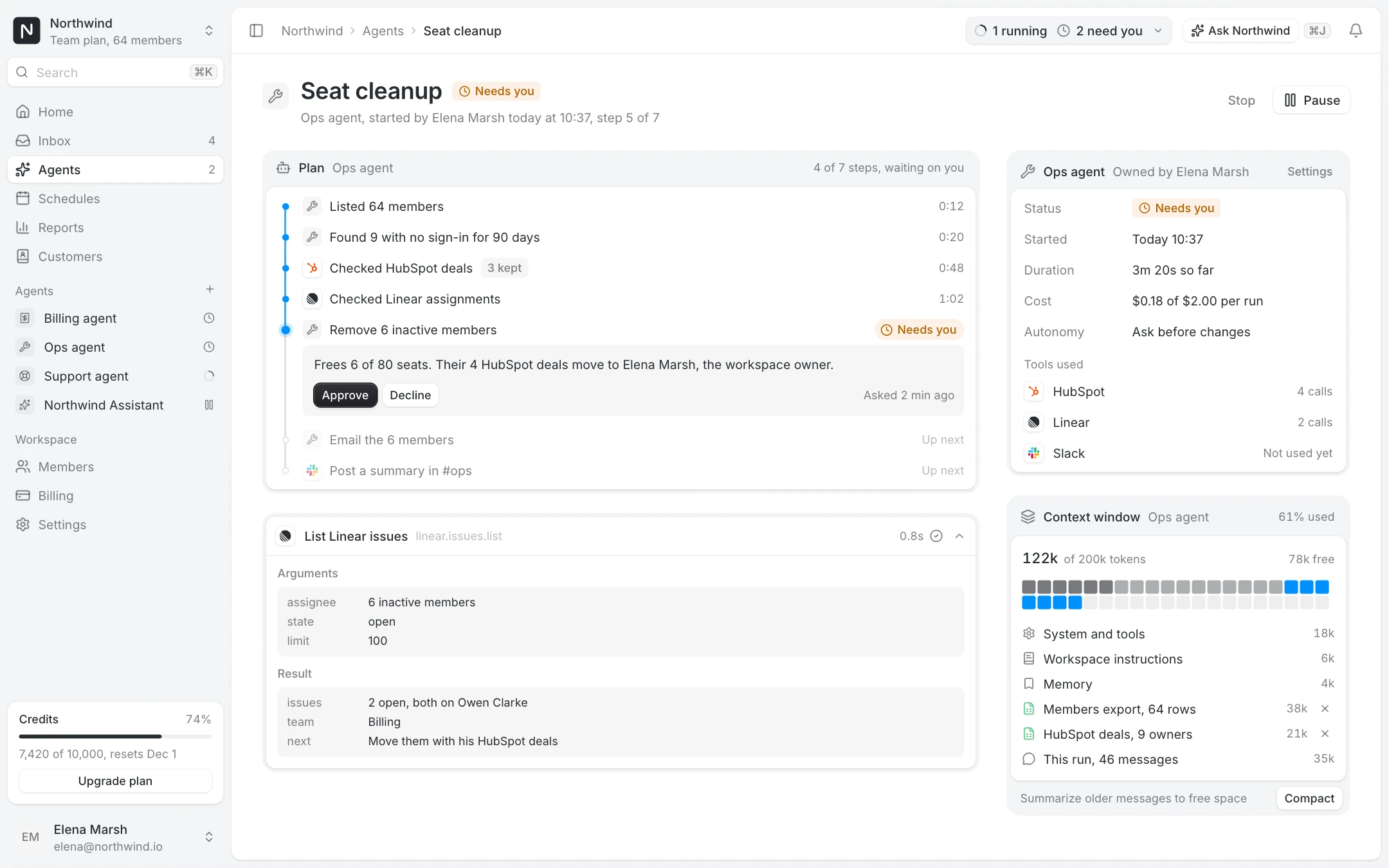
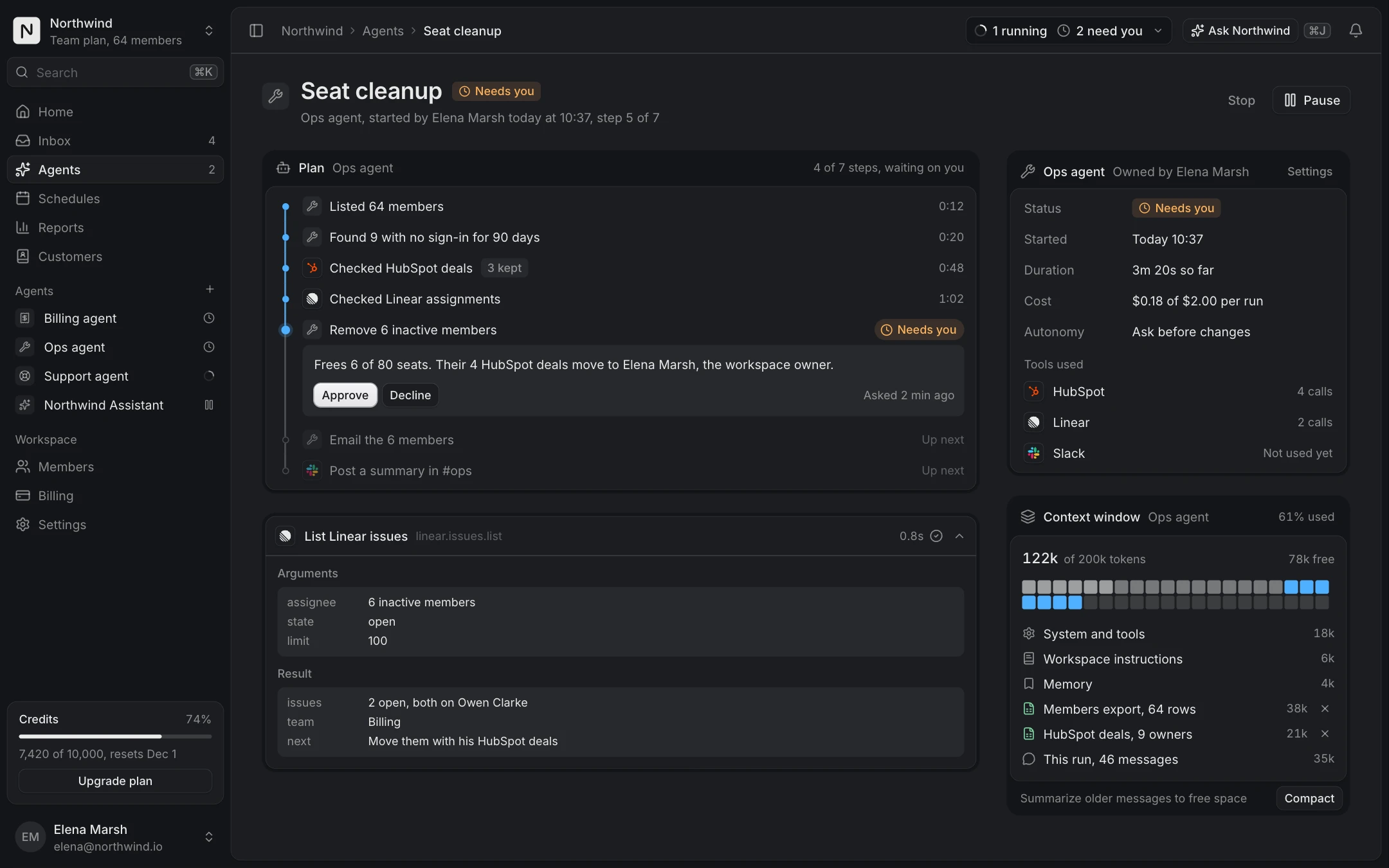
One run start to finish: the trail, the run log with undo, or the failed step to rewind.
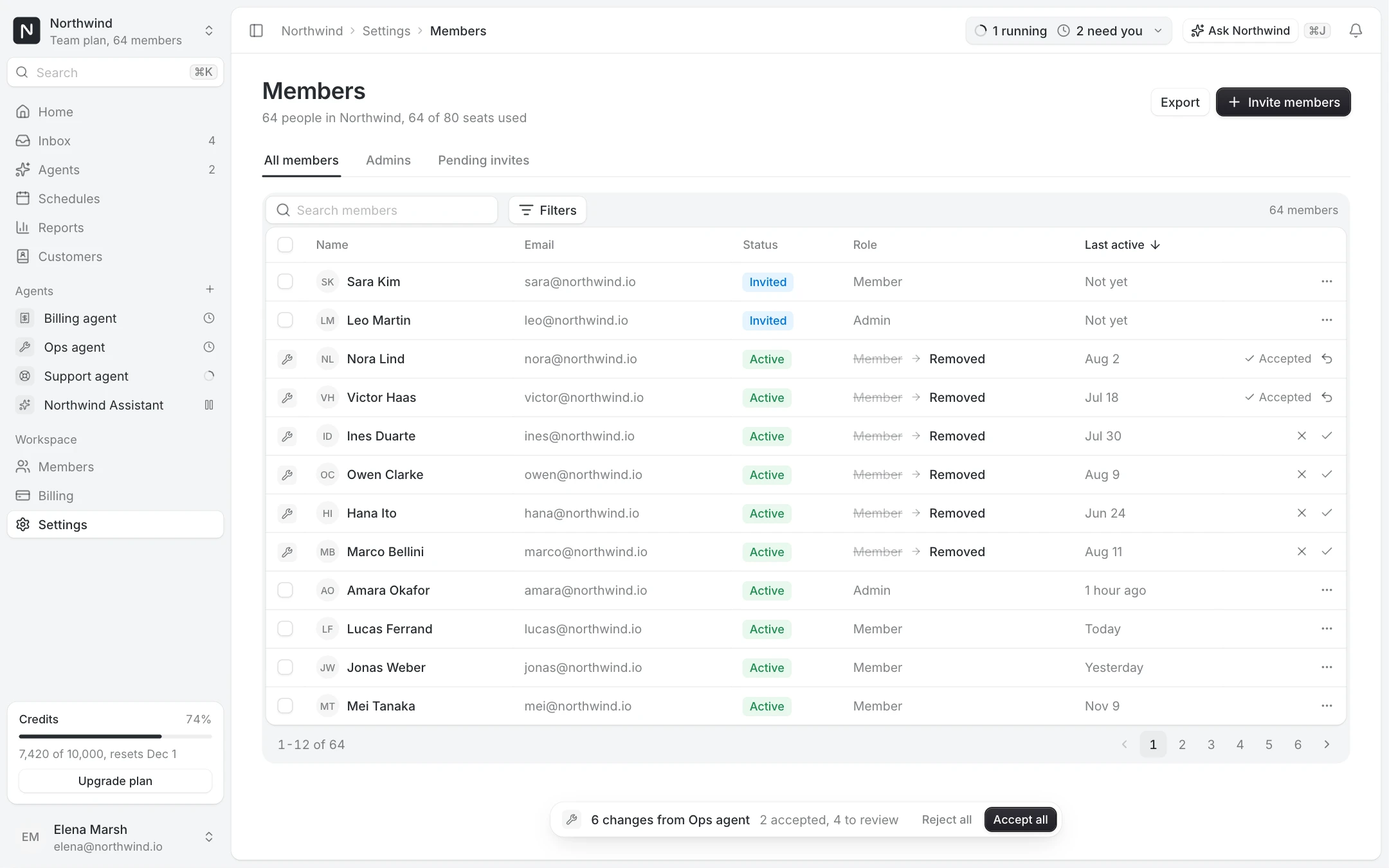
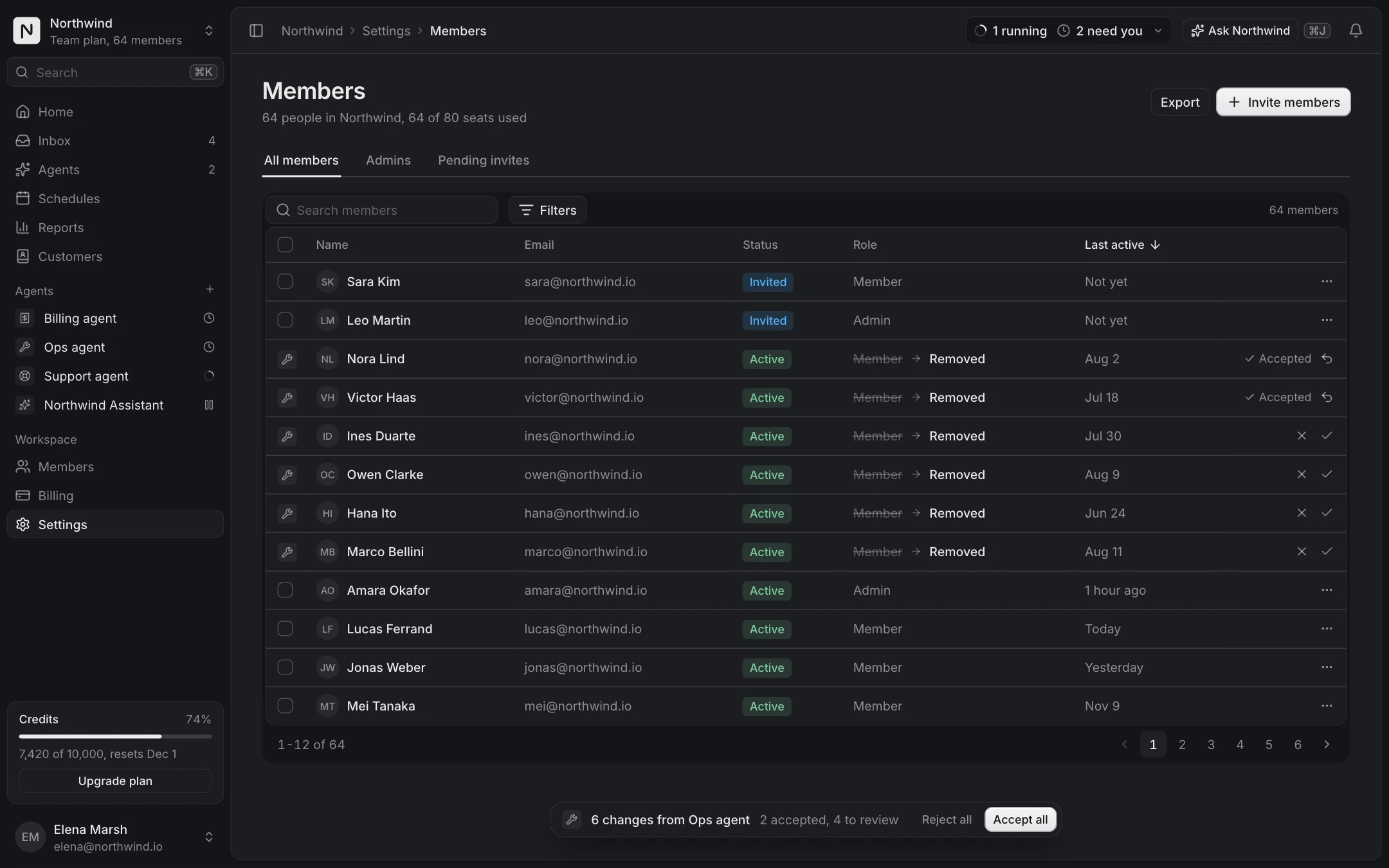
The Members table while an agent proposes changes, before and after on each row.